A cold-water pulse scrambled the Northeast shelf’s fisheries calendar
October 22, 2026 · By John Ian Lau
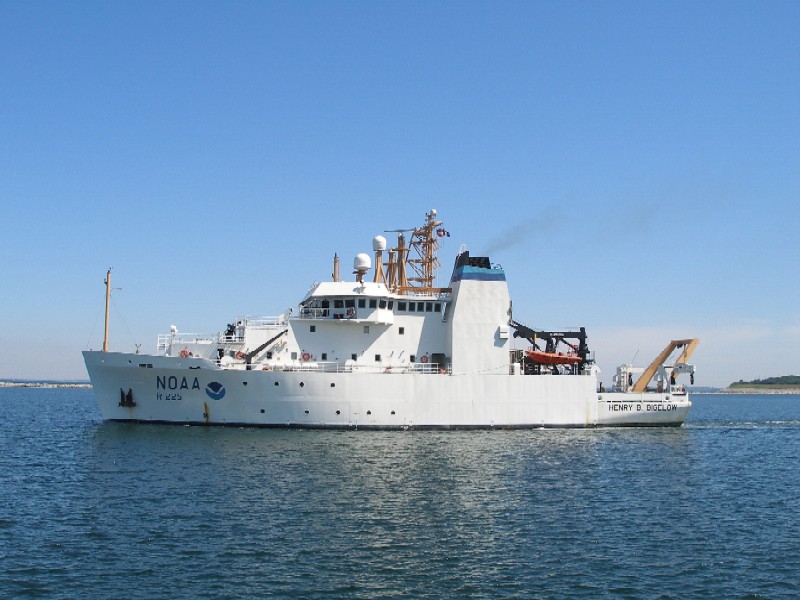
The Northeast U.S. shelf is accustomed to a tug-of-war between cold, fresh water arriving from the north and warm, salty flow associated with the Gulf Stream. In 2023–24, that balance tilted sharply. A new study led by Woods Hole Oceanographic Institution (WHOI) traces an unusual influx of cold, fresh water across the shelf and slope, where it coincided with delayed catches and disruption from New England to the Mid-Atlantic. For fishing communities, an ocean anomaly became a question of timing, revenue and how quickly established patterns can change.
Researchers found that surface temperatures across the continental shelf and slope ran 5 to 9 degrees Fahrenheit below the 20-year average during the cold pulse, while salinity also declined. They believe the water originated near the Labrador Sea and Grand Banks before moving south along the continental shelf. A southward shift in the Gulf Stream and changes in wind patterns may have contributed, but the team says it cannot yet determine the relative role of each factor. The findings appear in Journal of Geophysical Research: Oceans.
Lead author Glen Gawarkiewicz, a senior scientist at WHOI, described the region as a complicated contest between currents carrying different water masses. “It’s always in flux,” he said in the WHOI study announcement. The line captures the challenge for fisheries managers: a local signal can reflect basin-scale circulation, while the eventual effect on a species or a fishing season may depend on several interacting conditions.
The clearest commercial indicator in the study was longfin squid. In southern New England, squid typically appear in May and continue through June and July; in 2024, they did not arrive until August. Northeast commercial harvest fell 25.6 percent, or 10 million pounds, from 2023 to 2024, while reported value declined by $6.5 million. NOAA Fisheries’ commercial landings database records fish and shellfish landed and sold at the dock. A drop in landings is not, by itself, a direct estimate of stock abundance, but it is an immediate economic measure for the fleets and ports that depend on a seasonal catch.
Timing mattered as much as the annual total. Some captains told researchers that target species arrived as much as five weeks late in spring 2024 or missed their usual run. Those reports do not establish that the cold pulse alone caused every change in catch. They do show why observations from working vessels can add detail that a regional average misses: fishers encounter shifts in place and season as they work, while long-term measurements help explain what may be changing in the water around them.
Paula Fratantoni, chief of the Oceanography Branch at NOAA’s Northeast Fisheries Science Center and a co-author, emphasized the connection between local conditions and larger currents. “A relatively small shift in the trajectory of a large-scale current like the Gulf Stream can lead to dramatic changes locally, and understanding these relationships can help us better anticipate anomalous conditions in the future,” she said in the WHOI release.
The study combined five datasets, including 11 years of ocean profiles collected by active fishing vessels in partnership with the Commercial Fisheries Research Foundation of Rhode Island. The approach has a practical counterpart: NOAA Fisheries described a separate $2.3 million cooperative research initiative involving more than 50 fishing vessels to investigate Atlantic mackerel abundance under changing ocean conditions. The agency has noted that fishermen’s observations coincided with the cold-water event, while cautioning that researchers are still working to distinguish population changes from shifts in where fish are found.
That distinction matters against a longer backdrop. NOAA describes the Northeast shelf as one of the world’s fastest-warming marine ecosystems, even as the region experienced a striking cold spell. A temporary cooling event does not reverse the warming trend, and the mechanisms behind conditions in 2024 may differ from those that kept waters cooler in 2025. The new research is therefore less a forecast than a case study in why ocean monitoring must be able to detect both long-term movement and abrupt departures from familiar seasons.
For regulators and seafood businesses, the implication is to treat seasonal expectations as useful guides, not guarantees. Combining vessel observations, ocean profiles and landings records could help identify when a fishery’s calendar is moving, then give managers and communities more time to assess what that change means. Better evidence cannot remove uncertainty from a dynamic ocean, but it can make the next decision less dependent on yesterday’s pattern.
At OceanVines, our mission is to illuminate the inner sparks of every life we touch through our efforts in ocean conservation and education. Understanding how ocean conditions shape livelihoods is part of that commitment.
Together, we celebrate The Greatest Good