In a world where maritime headlines often revolve around disputes, sanctions, and security, one of the more financially relevant ocean stories is quieter: who is paying to train the next generation of ocean scientists — and what that implies for the data, talent, and diplomacy that will shape stewardship and the blue economy.
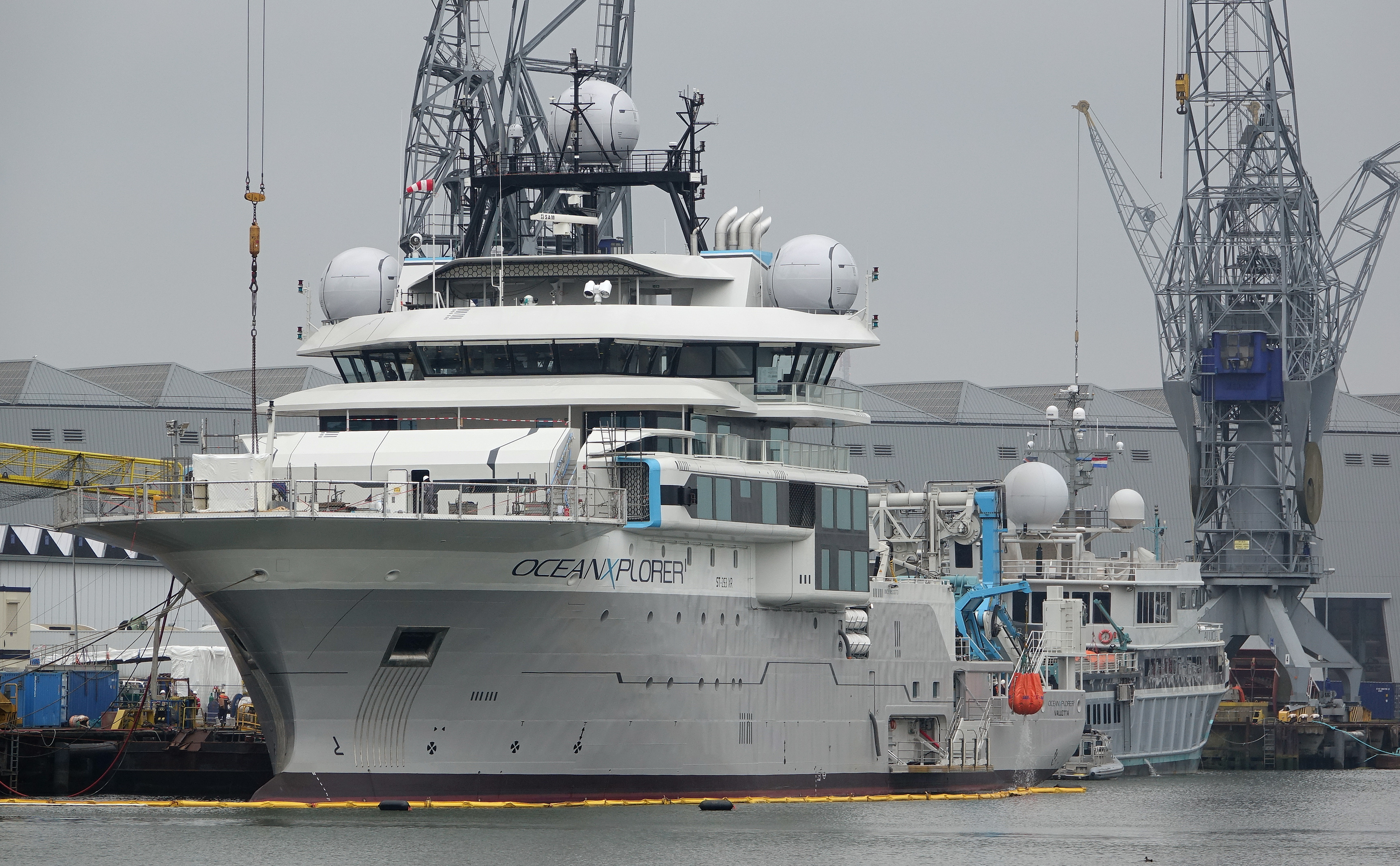
OceanX, the ocean exploration and education initiative founded by Ray and Mark Dalio, says its 2026 student program brought together 10 American and 10 Chinese early-career ocean scientists, students, and instructors aboard its flagship research and media vessel, OceanXplorer, sailing from Hong Kong to Shanghai between March 29 and April 8.
It is a small cohort — but the underlying premise matters: ocean governance is increasingly constrained by data scarcity, and data scarcity is, at root, a human-capital problem. The ocean is big; research budgets and sea-days are not. Training systems that produce oceanographers, technicians, ROV pilots, and science communicators are strategic infrastructure.
Two quotes, one shared bet
“At this time of great conflict in the world, I believe more than ever in the power of people-to-people exchanges to create mutual understanding.” — Ray Dalio, Founder of OceanX (OceanX press statement)
Dalio’s remark, published in OceanX’s announcement, reads like soft diplomacy. It is also a pragmatic acknowledgement that ocean science is inherently cross-border: currents, plastics, and fish stocks ignore exclusive economic zones. For investors and policymakers, the spillover is that shared measurement standards — and shared research capacity — can reduce uncertainty in everything from fisheries management to coastal resilience planning.
“Understanding the ocean requires both scientific insight and the ability to communicate it clearly.” — Vincent Pieribone, Co-CEO and Chief Science Officer of OceanX (OceanX press statement)
That combination of lab work and public narrative is not incidental. The OceanX announcement describes training that spans exploration methods, shipboard operations (including equipment demonstrations such as ROV operations and water sampling), and media and communication.
Why this fits the UN Ocean Decade
The mission arrives inside the broader push of the United Nations Decade of Ocean Science for Sustainable Development (2021–2030), which UNESCO says aims to stimulate ocean science and knowledge generation “to reverse the decline of the state of the ocean system and catalyse new opportunities for sustainable development.”
UNESCO’s Ocean Decade framing is explicit about the gap it is trying to close: better ocean outcomes require better ocean information, plus the partnerships to make that information usable across governments, communities, and markets. The tagline — “the science we need for the ocean we want” — is a reminder that the bottleneck is often not ambition but capacity.
From education to stewardship
Education missions do not substitute for enforcement, and ocean literacy does not automatically become reduced fishing pressure or lower plastic leakage. But they help create something that has become scarce: a pipeline of people able to take measurements, explain trade-offs, and implement marine policies in the real world.
That pipeline is central to OceanVines’ mission: to illuminate the inner sparks of every life we touch through our efforts in ocean conservation and education. Whether training happens aboard Sea Tiger in Hong Kong waters or aboard OceanXplorer on an international route, the shared premise is that stewardship starts with competence — and competence starts with time at sea.
For Asia in particular, the long-term opportunity is that human-capital investments can help translate global commitments into local outcomes: more credible marine protected areas, improved fisheries data, and stronger coastal adaptation planning. The more transparent and interoperable the measurements, the easier it becomes to channel finance toward what works — and away from what merely sounds good.
Ocean science will never be apolitical. But the most durable progress often begins with practical collaboration: shared methods, shared datasets, and shared training that outlasts the news cycle.
Together, we celebrate The Greatest Good.