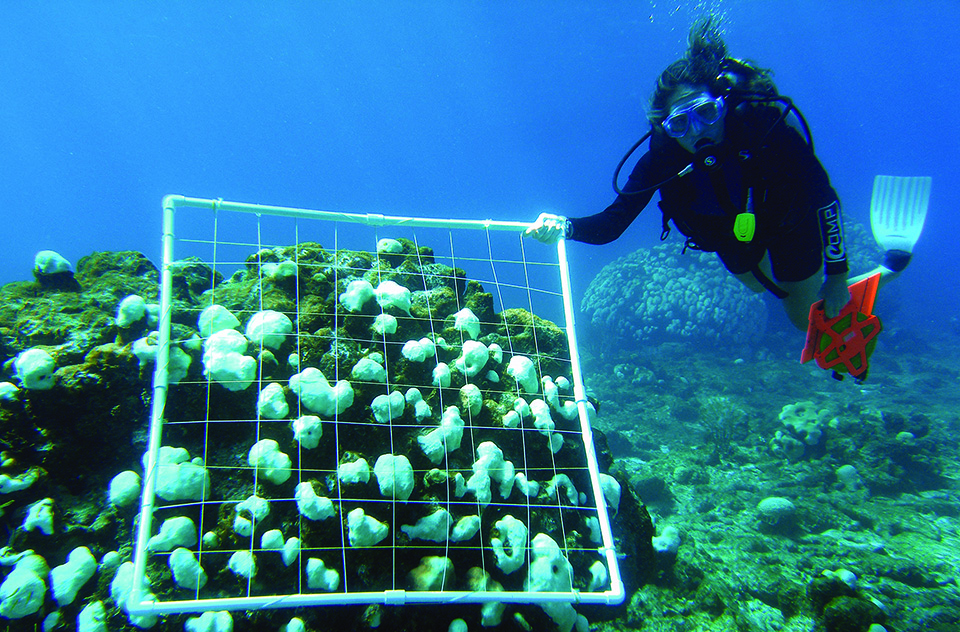
A marine heatwave used to sound like a seasonal anomaly. NOAA Coral Reef Watch’s newest global product treats it more like a standing risk: a daily, 5km-resolution map of ocean heat stress that classifies intensity anywhere on the planet, every day.
For investors and policymakers tracking the blue economy, the shift matters because heat is no longer a “reef problem” confined to tourism postcards. Coral reefs cover less than 1% of the planet’s surface yet support about 25% of all marine life, The Nature Conservancy notes—making reefs a leverage point for fisheries, coastal protection and jobs well beyond the dive industry.
A data upgrade that changes the conversation
NOAA Coral Reef Watch’s Daily Global 5km Satellite Marine Heatwave Watch defines marine heatwaves as “prolonged periods of anomalously high sea surface temperature,” and categorises them against a long-term, location-specific threshold derived from its CoralTemp dataset (1985–2012 climatology). It flags a heatwave when sea surface temperature exceeds the local 90th percentile, then assigns categories (1, 2, 3+) based on intensity bands.
That matters operationally. Managers don’t need to wait for a post-event report: the index is meant to be a near real-time signal of oceanic heat stress “likely applicable to and impacting a broader range of marine life,” not only corals.
From “bleaching season” to persistent exposure
The Nature Conservancy’s global “Super Reefs” work is built on a simple observation: not all reefs respond equally when the water runs hot. “We know there are corals out there that are surviving heat waves and increasingly warmer temperatures,” Annick Cros, resilience science lead for Global Oceans at The Nature Conservancy, said. “We need to find those resilient corals and protect them before they are lost to other threats, so that reefs have a chance to survive climate change.”
The organisation argues the economic arithmetic is stark. Coral reefs are described as “the most biologically diverse and economically valuable ecosystems on Earth,” supporting 25% of marine life while occupying less than 1% of the planet’s surface, and providing food and livelihoods for more than 1 billion people, according to The Nature Conservancy’s reporting on heat-resilient reefs.
What’s changing in 2026 is the ability to connect that ecological risk to a daily metric. A manager in Belize, Hawai‘i or the Marshall Islands can now point to the same category scale as a fisheries planner in the Northeast Pacific—turning “ocean warming” into a number that can be tracked alongside budgets, catch limits, insurance models and restoration plans.
Local action still decides outcomes
The heat signal is global; the interventions remain local. In The Nature Conservancy’s account of its Super Reefs programme, reef resilience specialist Nicole Craig describes the emotional drag of watching decline—and the role of practical tools in pushing back: “It can get a little depressing at times seeing the decline of the reefs. But we’re finding the best of the best corals. We’re training people how to use these tools and how to support efforts that keep hope alive. It’s a fight worth fighting.”
OceanVines’ mission is to illuminate the inner sparks of every life we touch through our efforts in ocean conservation and education. A daily heat-stress map does not, on its own, cool the sea; but it does make the work more legible—especially for coastal communities that have to justify enforcement, pollution controls, and restoration spending against immediate economic pressures.
UNESCO’s Ocean Decade frames the next decade as a collective push for “the ocean holds the keys to an equitable and sustainable planet,” and the heat-stress signal is part of that broader shift: from sporadic observations to continuous, decision-grade ocean intelligence.
The investment angle: heat as a balance-sheet variable
Coral-driven tourism and fisheries already show up in GDP and employment statistics; the next step is recognising heat exposure as a balance-sheet variable. When reefs fail, countries can lose natural breakwaters that reduce storm damage, habitat that underpins catch, and biodiversity that powers future drug discovery. The point is not to financialise nature—it is to be honest about the cost of inaction.
The NOAA product’s design choice—classifying intensity categories, not only anomalies—also hints at where analytics is heading: standardised “severity language” that can be shared across agencies, researchers and insurers. In a world of more frequent extremes, that shared language becomes infrastructure.
Together, we celebrate The Greatest Good.