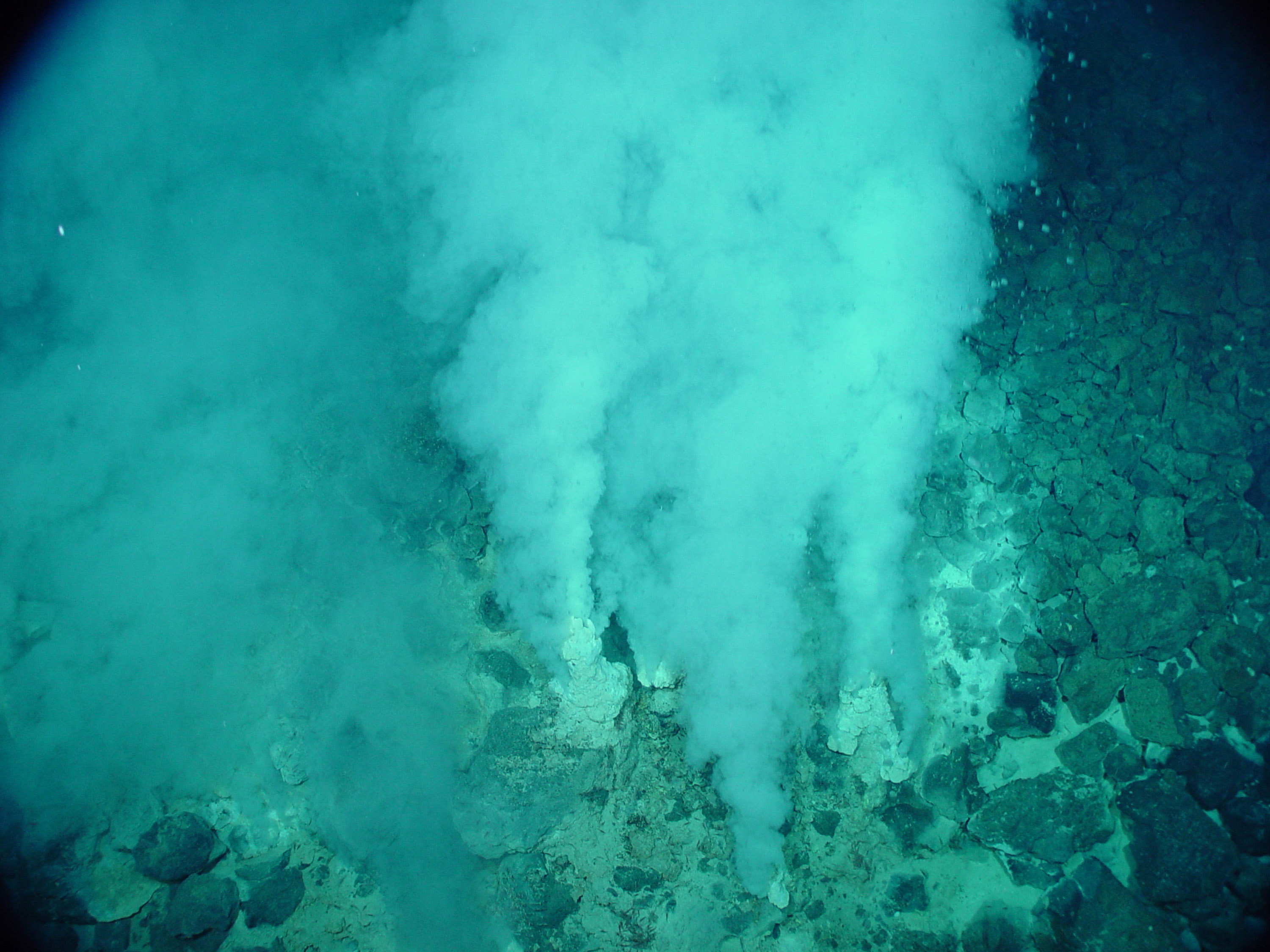
At the Our Ocean Conference in Mombasa this month, three African states — Malawi, Kenya and Madagascar — announced support for a precautionary pause on deep-sea mining in international waters, taking the global count of countries backing a moratorium or pause to 41, according to Carbon Brief\u2019s wrap-up of the conference. Malawi, a landlocked country, became the first African nation to support such a pause; Kenya and Madagascar followed later in the week.
The momentum is being measured against a fixed legal anchor. In 2021, the International Union for Conservation of Nature (IUCN World Conservation Congress) adopted Motion 069, later known as Resolution 122, calling for \u201cprotection of deep-ocean ecosystems and biodiversity through a moratorium on seabed mining\u201d unless and until a list of scientific, governance and equity conditions is met. Eighty-one governments and government agencies voted in favour, with eighteen against and twenty-eight abstentions; among NGOs and civil society organisations the vote was 577 in favour, thirty-two against, thirty-five abstaining.
The institutional voice
The IUCN has continued to apply that resolution publicly. \u201cAt the 2021 IUCN Congress in Marseille, IUCN Members voted to adopt Resolution 122 calling for a moratorium on deep-sea mining unless and until certain conditions are met, which includes the need for robust and science-based regulations,\u201d the organisation stated in a 28 March 2025 statement delivered at the International Seabed Authority. \u201cThe mere suggestion that exploitation activities might commence at this stage, where none of the conditions in Resolution 122 have been met, is unacceptable.\u201d
That position has been reinforced at the top of the institution. \u201cAccording to IUCN\u2019s Red List assessments, 44% of the world\u2019s warm water coral species are now at risk of extinction and 50% of global mangrove ecosystems face collapse by 2050,\u201d said Dr Grethel Aguilar, Director General of IUCN, in her UNFCCC COP29 high-level statement. \u201cThis is just one example of the devastating impacts of climate change that can have profound implications for communities and economies across the world.\u201d The deep-sea mining debate sits inside that broader climate-and-biodiversity argument: degrade the deep ocean and the layers above pay a price.
The high-seas linkage
The Mombasa announcements also intersect with the High Seas Treaty, which entered into force on 17 January 2026 after reaching its sixtieth ratification on 19 September 2025. The first Conference of the Parties is scheduled for January 2027 in New York. As of OOC11, Comoros became the 90th country to ratify (Carbon Brief).
The Nature Conservancy used the same conference window to commit to supporting up to five high-seas marine protected area proposals by 2030. \u201cAt the Our Ocean Conference in Mombasa, one message is clear: Africa has a critical role to play in leading the global ocean agenda and accelerating progress from ambition to delivery,\u201d said Ademola Ajagbe, TNC\u2019s regional managing director for Africa. \u201cThe high seas are our planet\u2019s largest shared biome, vital for biodiversity, climate stability, food security, livelihoods and resilient blue economies.\u201d For African delegations linking moratorium support with high-seas MPA design, the two tracks reinforce each other: the BBNJ Agreement supplies the framework to designate, and a mining pause keeps the canvas intact.
Why this matters now
The pressure point is the International Seabed Authority, the UN-mandated body negotiating the rules for any commercial exploitation of seabed minerals in areas beyond national jurisdiction. IUCN has warned the ISA, on the record, against allowing exploitation to begin while conditions in Resolution 122 are unmet, and an analysis from the Deep Sea Conservation Coalition argues a pause is needed to give the High Seas Treaty\u2019s biodiversity tools \u2014 area-based management and environmental impact assessments \u2014 practical meaning.
For Asia-Pacific investors and sovereign funds weighing critical-minerals exposure, the read is operational. Forty-one countries supporting a pause is not yet a binding ban; it is a coordination signal across a growing share of states whose votes determine ISA outcomes. The downside risk that deep-sea projects could be greenlit and then later constrained, stranded, or excluded from blue-finance instruments now has a clearer political curve.
OceanVines lens
OceanVines exists to illuminate the inner sparks of every life we touch through our efforts in ocean conservation and education. The deep sea is the part of the ocean almost no one will ever see, yet it underwrites the climate stability that makes everything above it possible. Asking governments to wait until the science, the rules and the consent are in place before opening a new extractive frontier is, properly understood, an act of stewardship, not delay.
Together, we celebrate The Greatest Good.