The number that matters this week is not a percentage — it is a price tag. At the 2026 Our Ocean Conference in Mombasa, more than 100 governments, businesses and civil society organisations announced 320 new voluntary commitments valued at $6.4 billion, according to World Resources Institute (WRI). The headline is capital. The harder story is what the money must buy: credible ocean data systems, enforceable rules on the high seas, and the governance capacity to translate pledges into protection.
WRI, which serves as secretariat for the conference, framed the event as a shift “from dialogue to delivery” — and the host country set the tone. “This conference is about turning words into commitments, commitments into action, and action into a legacy we can be proud of,” Hassan Ali Joho, Kenya’s Cabinet Secretary for Mining and Blue Economy, said in the WRI statement.
Some announcements were immediately quantifiable. Kenya committed $200 million to install electronic monitoring across all industrial fishing vessels in its waters, WRI said — a technology upgrade that can change what is enforceable, not just what is promised. The same release cited a World Bank Group plan to invest $1 billion over the next two years to help developing countries build sustainable and resilient blue economies.
Why the money flows to data first
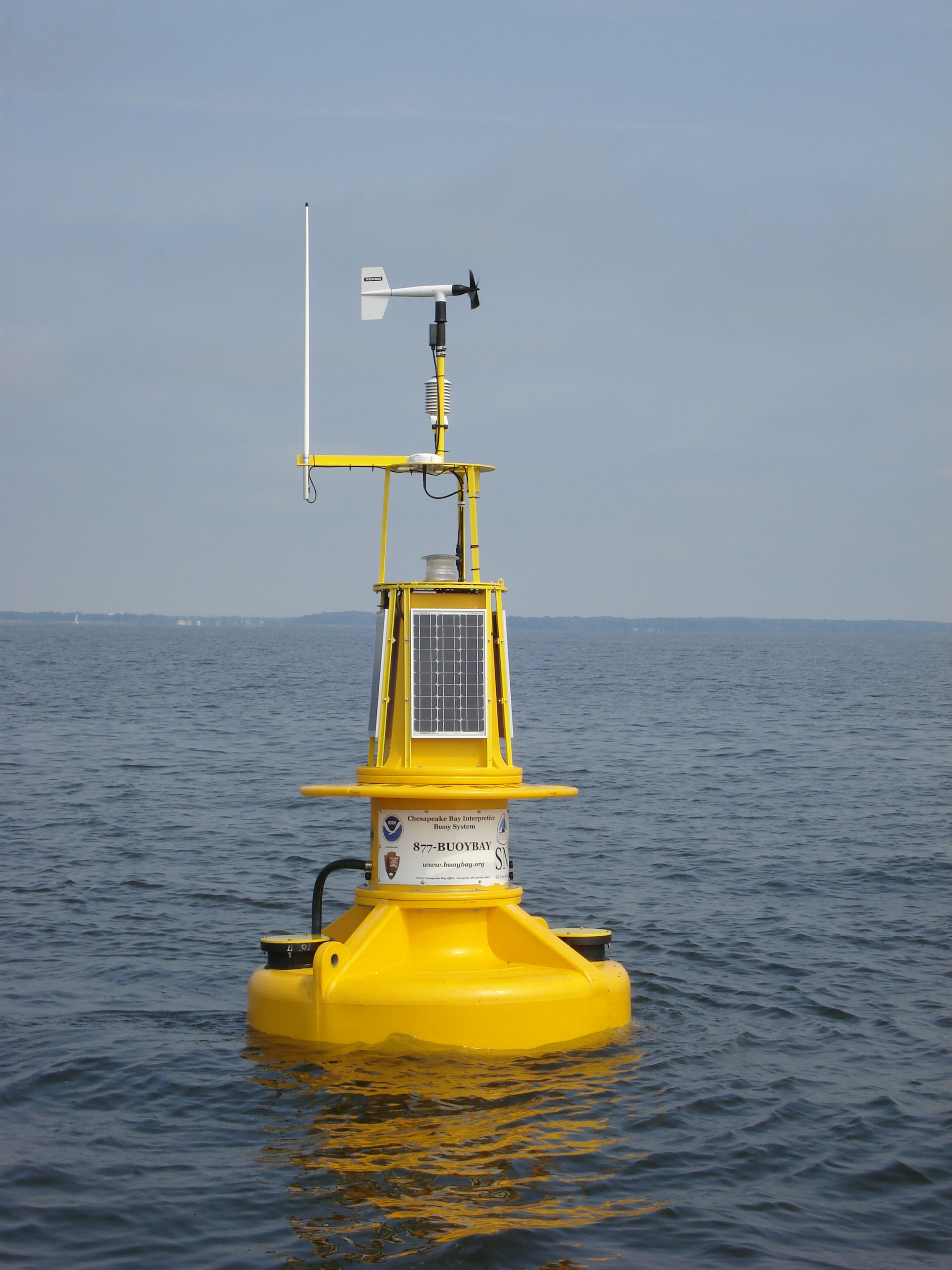
Ocean conservation tends to be discussed in maps — square kilometres protected, fisheries closed, reefs restored. But those outcomes begin with instrumentation. Without baseline measurements and consistent monitoring, no one can say whether an MPA is thriving, whether a fishery is being fished legally, or whether blue carbon projects are real.
That is why the Intergovernmental Oceanographic Commission of UNESCO (UNESCO-IOC) has put ocean observations near the centre of its agenda at OOC11. In its conference briefing, UNESCO-IOC argues that “no country can observe the ocean alone,” and it calls for renewed commitments to sustain the Global Ocean Observing System (GOOS) through its OceanEye session at the conference (UNESCO-IOC).
UNESCO-IOC’s numbers are deliberately stark: around 80% of life on Earth depends on the ocean, yet only 8.4% has been designated as protected and just 2.8% is effectively protected, the agency said (UNESCO-IOC). Put differently, the gap is not only ecological; it is administrative. The bottleneck is often enforcement and measurement — the unglamorous infrastructure of stewardship.
High seas: governance is the constraint
The next phase of conservation is moving further offshore. The high seas cover nearly two-thirds of the ocean and sit beyond national jurisdiction — and, by design, beyond most governments’ enforcement apparatus. In Mombasa, The Nature Conservancy used the conference to submit a commitment aimed at accelerating the first generation of high seas marine protected areas.
“Our Ocean Conference has always been about turning ambition into action,” Andreas Hansen, senior director for policy at The Nature Conservancy, said in the group’s statement. “With the High Seas Treaty, we have the policy foundation to protect biodiversity beyond national jurisdiction. The priority now is clear. Countries must continue to ratify the treaty and work together to move quickly toward implementation” (The Nature Conservancy).
Emily Owen, global director of ocean protection at The Nature Conservancy, put the case in economic terms — the kind that can move ministries of finance as well as environment: “These waters sustain migratory species, support ocean health and underpin livelihoods around the world,” she said in the same release (The Nature Conservancy).
TNC’s pledge is to support up to five high seas MPA proposals by 2030, providing scientific, technical and policy support. The organisation’s emphasis on financing, monitoring and compliance is a tacit acknowledgement that paper parks offshore are easy; managed parks offshore are expensive.
Where OceanX fits in
The conference’s focus on observation and governance also highlights a second constraint: talent. Ocean data systems are only as good as the people maintaining them and the leaders capable of translating them into policy. OceanX, a nonprofit founded to combine exploration, science and education, describes its mission as “to unlock the ocean’s sustainable potential — for the benefit of both people and planet” (OceanX). That blend matters because it treats science as a pipeline: expedition data, public understanding, and eventually political permission.
In practice, this is what “blue economy” investments increasingly buy: not just ships or sensors, but long-term institutional capacity — the ability to measure, model and manage the ocean as shared infrastructure.
OceanVines exists to illuminate the inner sparks of every life we touch through our efforts in ocean conservation and education. For us, the question behind the week’s $6.4 billion is simple: will more young people gain the skills to collect trustworthy ocean data — and will more communities gain the power to act on it? Aboard Sea Tiger, we treat ocean literacy as the first step toward enforcement, and enforcement as the first step toward recovery.
The benchmark to watch
Voluntary commitments are not binding finance, and conferences are not regulators. But OOC’s value is its structure: it aggregates capital, publishes commitments and tracks progress. Over time, the most credible signal will be whether money continues to flow to the “boring” layers — observation networks, electronic monitoring, compliance systems — that make conservation measurable.
The ocean’s next decade will be won less by rhetoric than by instrumentation and institutions. If the pledges announced in Mombasa become functioning data systems and enforced rules, the $6.4 billion headline will matter far beyond this week’s news cycle.
Together, we celebrate The Greatest Good.