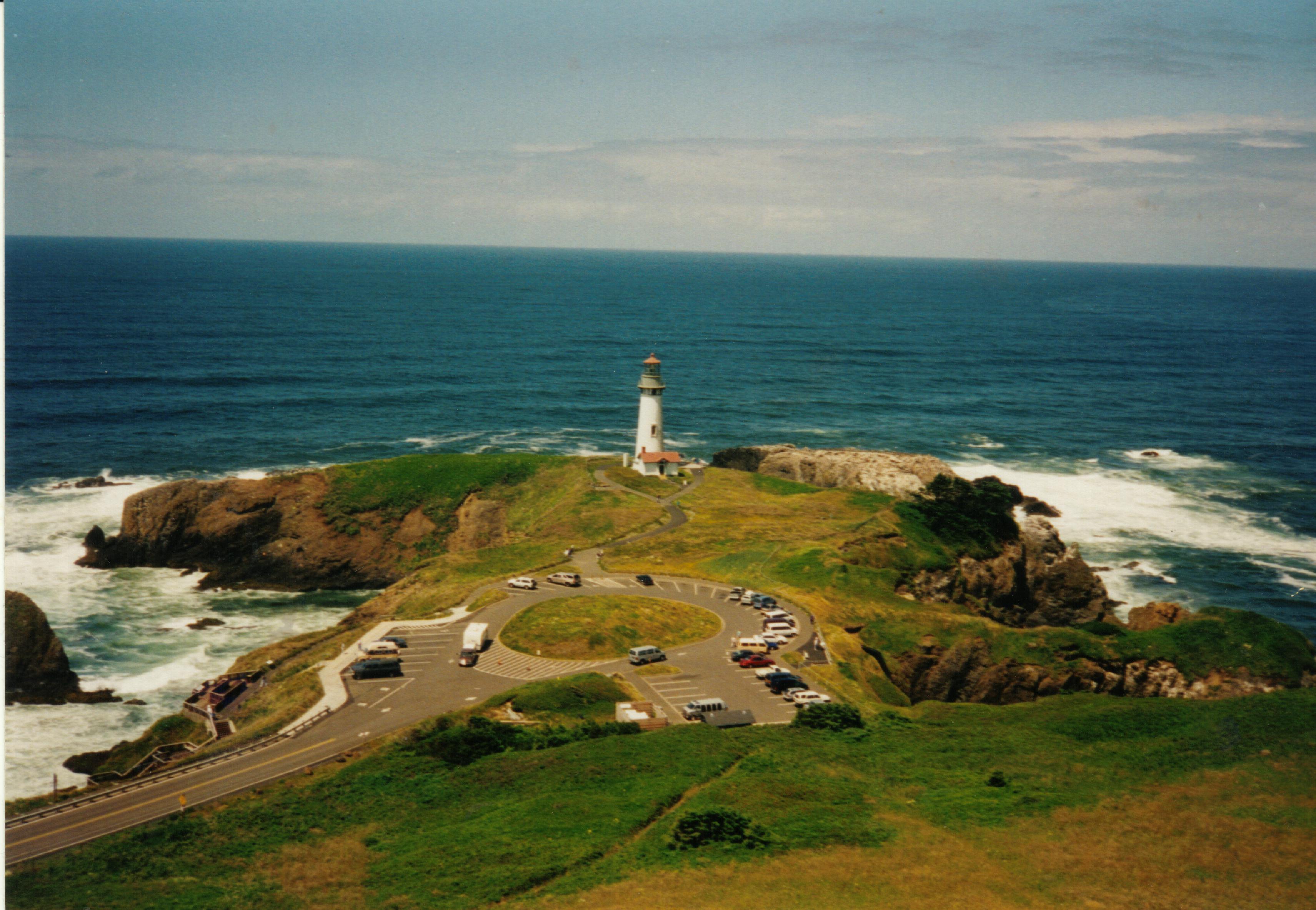
The US National Science Foundation said on 18 June 2026 that it will not proceed with further dismantling of the Ocean Observatories Initiative — a USD 368 million network of more than 900 sensors across five arrays in the Atlantic and Pacific — one day after the Senate unanimously passed the Saving the OOI Act of 2026 (S.4822). The reversal preserves what oceanographers describe as the densest long-term observing network the United States maintains.
NSF told stakeholders in a written statement that, "effective immediately, NSF will not proceed with further removal or descoping of equipment from the remaining arrays and will continue operations including planned maintenance," as reported by Eos. The agency added that the Coastal Endurance Array off Oregon and Washington — already pulled from the water under the prior descoping plan — will be redeployed after servicing. The Coastal Pioneer Array off North Carolina, the Global Station Papa Array in the Gulf of Alaska, the Global Irminger Sea Array southeast of Greenland and the Regional Cabled Array off the Pacific Northwest will all continue operating.
How a 200-word bill moved in 48 hours
S.4822 is less than two pages. It bars NSF from spending appropriated funds to decommission, descope or remove OOI equipment, and it was introduced on 12 June 2026 by Senators Jeff Merkley (D-OR) and Lisa Murkowski (R-AK) with cosponsors including Maria Cantwell (D-WA), Ron Wyden (D-OR), Jack Reed (D-RI), Tammy Baldwin (D-WI), Sheldon Whitehouse (D-RI), Patty Murray (D-WA), Elizabeth Warren (D-MA), Edward Markey (D-MA), Chris Van Hollen (D-MD) and Dan Sullivan (R-AK). It cleared the Senate by unanimous consent on 17 June.
"We are calling out an SOS — Save Ocean Sensors. Dismantling the Ocean Observatories Initiative is supreme stupidity, costing taxpayers millions of dollars and destroying a vital source of climate data," said Senator Merkley when he introduced the bill. Senator Murkowski added that "the NSF started the OOI system a decade ago to help communities prepare for significant weather events, predict fisheries disasters, and bolster maritime safety efforts. In Alaska, the Global Station Papa Array has been instrumental in doing just that as our coastal communities work to adapt and become more resilient amidst an ever-changing marine environment."
In the House, Science, Space, and Technology Committee ranking member Zoe Lofgren (D-CA) called the reversal "welcome news" and said that "NSF leadership is stopping the dismantling of the ocean observatory initiative... This pathetic scheme was illegal. NSF is governing via chaos and reactionary nonsense," in an 18 June statement.
What the budget arithmetic looked like
The trigger was the Trump administration's FY2026 budget request, which proposed cutting the National Science Foundation's topline by roughly 55 percent and reducing OOI funding by approximately 80 percent. Under the original descoping plan, three of the five arrays — Endurance, Pioneer and Station Papa — would have been removed; the Regional Cabled Array off Oregon was to be wound down by 30 September 2028. The Guardian reported that the prospective writedown of equipment already built and deployed prompted bipartisan pushback in coastal-state delegations on grounds of fiscal waste as much as scientific loss.
OOI is operated under a cooperative agreement with the National Science Foundation by the Woods Hole Oceanographic Institution, which has held the Program Management Office role since 1 October 2018. The sensor network streams oxygen, salinity, temperature, current, pH, biological and seismic data — much of it in near-real time — to a public data portal used by university researchers, NOAA forecasters and fisheries managers.
OceanVines lens
The investable read is that the OOI episode reprices political risk on US ocean science. Investors and philanthropic funders backing blue-economy infrastructure now have an additional data point: a sub-USD 50 million annual programme that anchors hundreds of millions in downstream research can be defended on bipartisan, taxpayer-value grounds, even in a hostile budget cycle. The 2025 National Academies report on the future of ocean science, cited by NSF as part of its rationale for descoping, will likely be reread as a road map rather than an exit memo.
For coastal communities from Newport, Oregon to Cape Hatteras and the Aleutians, continuous observation is not abstract. It is the difference between forecasting a marine heatwave that closes a fishery and missing it. OceanVines exists to illuminate the inner sparks of every life we touch through our efforts in ocean conservation and education, and continuous, public ocean data is the floor under that work.
Together, we celebrate The Greatest Good.