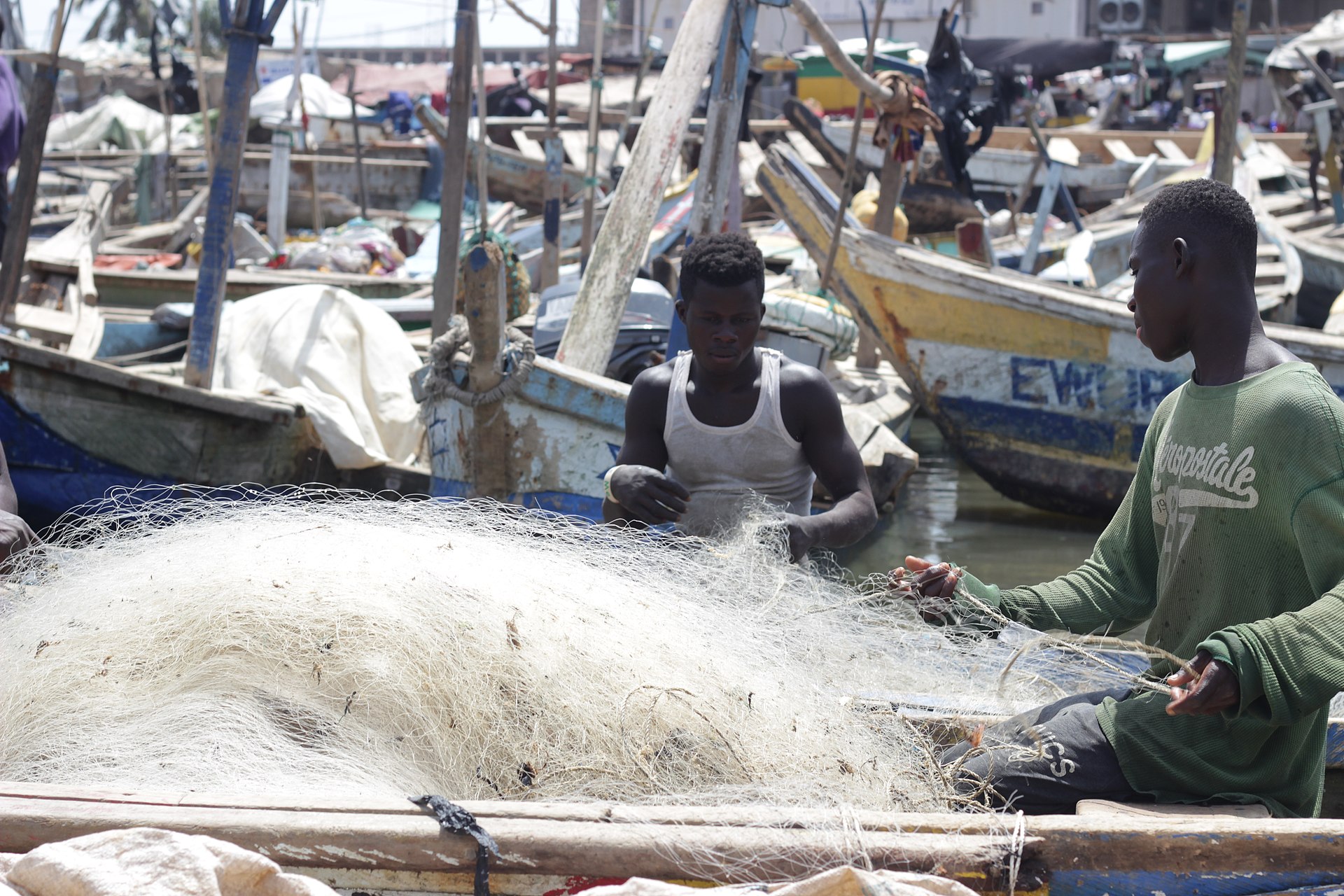
Sixteen national governments signed the Mombasa Declaration on Fisheries Transparency at the 11th Our Ocean Conference on 17 June 2026, committing to publish vessel-ownership data, modernise fishing registries and share information with the United Nations Food and Agriculture Organization. Illegal, unreported and unregulated fishing costs the global economy as much as USD 50 billion a year, according to specialists cited by The Washington Post; the declaration is the most concrete answer the conference produced this year.
The first signatories span every continent except Antarctica: Belgium, Cameroon, Chile, the Dominican Republic, France (on behalf of its overseas territories), Gabon, Gambia, Ghana, Guinea, Liberia, Panama, Papua New Guinea, Peru, the Republic of the Congo, Somalia and South Korea. The declaration formally builds on the Global Charter for Fisheries Transparency, which sets out ten low-cost or no-cost policy principles — including making vessel registries searchable and publishing fishing authorisations — that governments commit to implement in law and in practice.
The transparency case
"For too long, fisheries have operated far from shore, with inadequate oversight and opaque supply chains. These fishing practices have depleted fish stocks, undermined coastal communities, and enabled illegal, unreported, and unregulated fishing and human rights abuses," said Beth Lowell, Vice President at Oceana. "The Mombasa Declaration signals that governments around the world are ready to act against illegal fishing, and to work together for a more transparent, equitable, and sustainable ocean for all."
The signatories' economic exposure to the problem is direct. "In my country, our very existence depends on fish. Sixty percent of our animal protein comes from fish, and ten percent of our population depends on the fisheries value chain for livelihood," said the Hon. Emelia Arthur, Ghana's Minister of Fisheries and Aquaculture. "Fisheries are a matter of culture and national security for us. I'm happy that Ghana is among the first countries to sign the Mombasa Declaration, because it provides a platform for all of us, the different governments, to come together and declare on an international platform that we are working together, fighting together for transparency in the fisheries sector."
The supporting coalition is large. Beyond signatories, the Mombasa Declaration is endorsed by Oceana, the Coalition for Fisheries Transparency, the Environmental Justice Foundation, Global Fishing Watch and Bloomberg Philanthropies. "When governments commit to transparency — sharing vessel identities, ownership or tracking data — they create an interconnected network where bad actors have nowhere left to hide," said Tony Long, Chief Executive Officer of Global Fishing Watch.
Within the OOC11 ledger
The Mombasa Declaration is one strand of a larger package. The conference closed on 18 June with 320 voluntary commitments totalling USD 6.4 billion, with over 100 governments, businesses and civil-society organisations contributing. Cumulative pledges from the conference series since 2014 now exceed USD 169 billion across more than 2,900 commitments. Canada and Jamaica will jointly host OOC12 in 2027.
Among the dollar figures, the United States announced 24 commitments worth more than USD 96 million at the conference, subject to congressional notification, "to advance maritime security; combat illegal, unreported, and unregulated (IUU) fishing; and promote science-based fisheries management," the US State Department said in a 18 June release. The juxtaposition with Washington's contemporaneous reopening of US Pacific marine national monuments to commercial fishing — the subject of a separate 11 June presidential proclamation — illustrates the policy strain inside the world's largest blue-economy actor.
Implementation arithmetic
The Mombasa Declaration's strength is that its core obligations cost very little to deliver. Most of the ten Global Charter principles — searchable vessel registries, publication of licensing data, port-state inspection reports — sit within the existing administrative architecture of fisheries ministries. The harder lift is political: it means exposing the beneficial owners of flagged vessels, which can implicate domestic constituencies.
"There is growing recognition that a productive and sustainable blue economy depends on strong ocean governance, effective monitoring, and accessible data," said Maisie Pigeon, Director of the Coalition for Fisheries Transparency. Signatory countries will begin implementing the Declaration immediately; organisers expect more nations to join before OOC12 in 2027.
OceanVines lens
The investable read is that transparency unlocks the rest of the ocean-economy reform agenda: marine spatial planning, blue bonds, certified fisheries access agreements all require reliable vessel data. For coastal communities — Ghanaian beach-seine crews, Pacific island fleets, Caribbean inshore fishers — accurate registries are the difference between a livelihood that compounds and one that erodes. We exist to illuminate the inner sparks of every life we touch through our efforts in ocean conservation and education, and that work begins where data ends the dark.
Together, we celebrate The Greatest Good.