At the first African Our Ocean Conference, organisers tallied 320 new commitments valued at US$6.4 billion. The number is large enough to matter. It is also vague enough to invite a familiar question in climate and conservation finance: what, exactly, will be delivered — and how will anyone know?
The World Resources Institute, which serves as the conference secretariat, said the pledges came from 104 countries and organisations and span marine protection, sustainable fisheries, climate resilience and the blue economy. It also pointed to a running total of US$175.6 billion across 3,220 commitments since 2014 — a decade-long ledger that now makes credibility the central currency.
Why the headline figure is not the whole story
One reason the conference model has held attention is that it speaks in budgets — not only biology. Among the largest new items: the World Bank Group said it plans to invest US$1 billion over the next two years to help developing countries build “sustainable and resilient blue economies,” according to WRI’s release. In the same roundup, Kenya pledged US$200 million to expand electronic monitoring across its industrial fleet, and Canada committed C$682 million to small harbours infrastructure.
But commitments are not disbursements. Even well-intentioned announcements can drift if funding is reallocated, procurement stalls, or enforcement capacity fails to materialise. That matters because the ocean is a balance sheet with compounding risks: illegal, unreported and unregulated fishing is estimated to cost African economies US$11–13 billion annually, a range cited in WRI’s release and echoed by UNESCO’s Intergovernmental Oceanographic Commission (IOC).
The accountability test: measurement, not messaging
“This conference is about turning words into commitments, commitments into action, and action into a legacy we can be proud of,” said Hassan Ali Joho, Kenya’s Cabinet Secretary for Mining and Blue Economy, in the WRI statement.
Delivery depends on measurement infrastructure: baseline data, repeatable monitoring, and transparent reporting. That is why UNESCO’s IOC used the meeting to make the case for sustained funding of the Global Ocean Observing System (GOOS) — arguing that “no country can observe the ocean alone” and that observation is prerequisite to policy, enforcement and investment.
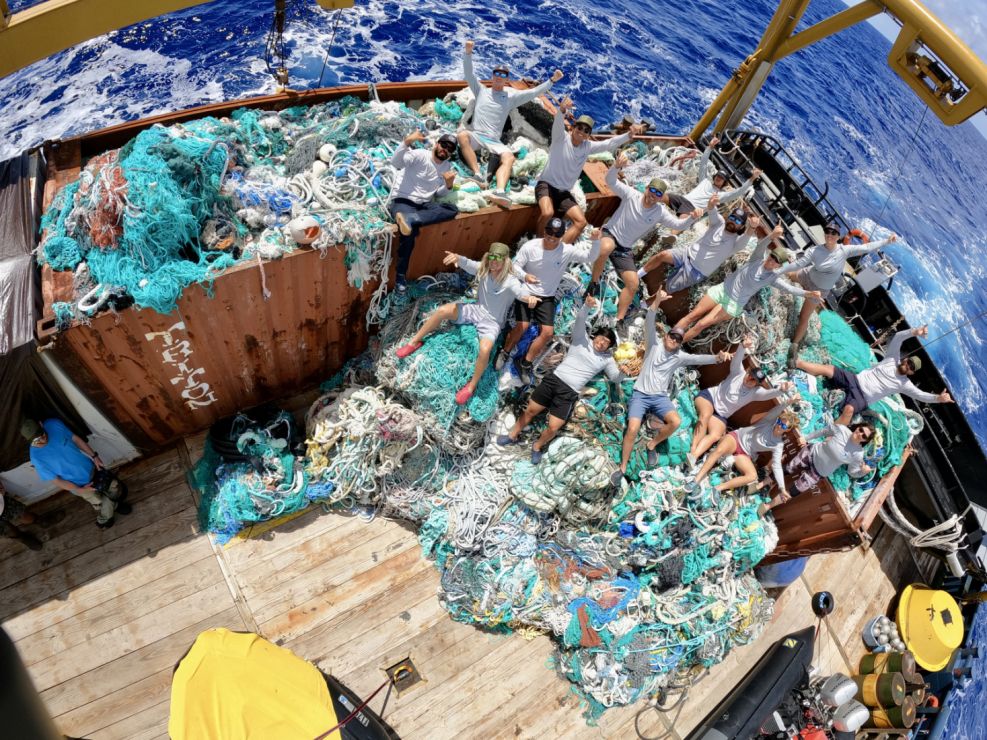
Separately, the NOAA Marine Debris Program marked its 20th anniversary this week, underscoring that preventing ocean harm is a long-duration operational task: research, removal logistics, and sustained national coordination — not a single campaign cycle.
A warning from the practitioners
In a statement issued from Mombasa, Dr. Susan Lieberman, Vice President of International Policy at the Wildlife Conservation Society, welcomed the scale of new pledges — then sharpened the point: “Commitments and promises are not an end in themselves, but a milestone along a critical path. … The ocean cannot wait; the time is now.” (WCS Newsroom)
Her caution lands because the sector’s history is littered with well-branded targets that failed to translate into enforcement, especially where communities lack resources and states lack patrol assets. The conference’s own reports highlight progress — WRI says about 78% of commitments in Africa since 2014 are “complete or in progress.” But the remaining share is the uncomfortable remainder that investors and citizens tend to remember.
What investors and coastal communities should watch next
- Clear definitions: is a commitment a policy announcement, a signed contract, a budget appropriation, or a completed project?
- Verification: are outcomes independently measured (fish biomass, bycatch reduction, coral cover, jobs, or avoided emissions), or self-reported?
- Time to impact: does a pledge fund near-term enforcement capacity, or long-horizon research with uncertain operational follow-through?
For OceanVines, the implication is straightforward: ocean conservation can no longer be framed as a moral add-on. It is infrastructure for food security, coastal resilience and economic continuity. Our mission is “to illuminate the inner sparks of every life we touch through our efforts in ocean conservation and education.”
In the coming months, the most meaningful scoreboard will not be the size of the pledge number — it will be the number of projects that can be audited, mapped, and shown to work in water and on shore.
Together, we celebrate The Greatest Good.