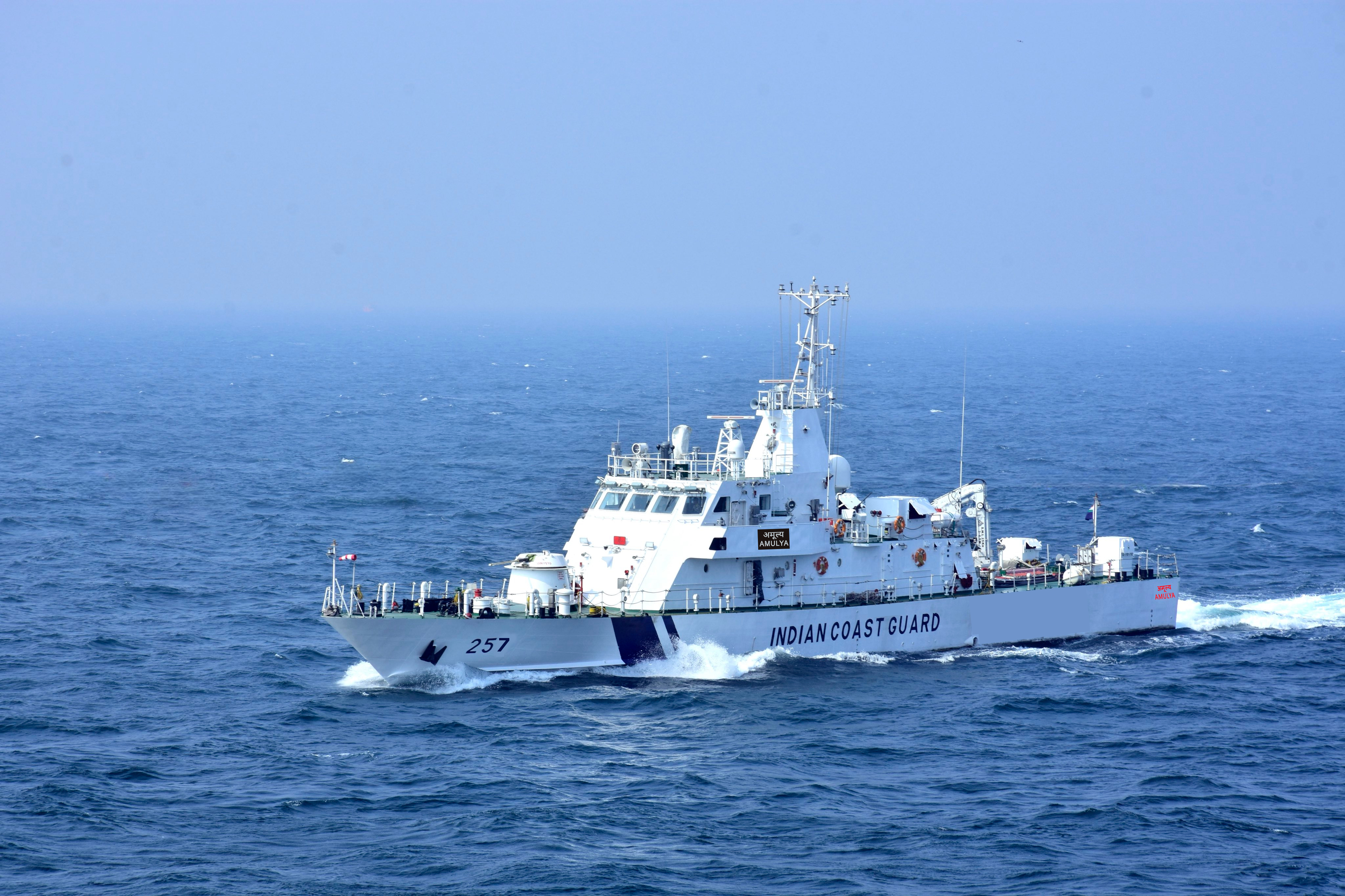
Europe and Germany are putting fresh money behind an unglamorous idea: that the fastest way to protect the Western Indian Ocean may be to make the region’s rules investable. This week in Mombasa, the European Union and Germany’s Federal Ministry for Economic Cooperation and Development launched a €60.5 million Sustainable Western Indian Ocean Programme (SWIOP), spanning nine countries from Kenya to Mozambique and the island states that sit across key shipping lanes and fishing grounds (European External Action Service).
The design is telling. SWIOP is framed less as a “save the sea” pledge than as a governance-and-finance intervention: better monitoring of fisheries, regional coordination, and a push to turn small sustainable enterprises into bankable projects (European External Action Service). The underlying economics are brutal. The EU delegation said illegal, unreported, and unregulated fishing costs the region more than €214 million annually—lost income that drains coastal communities and depletes shared fish stocks (European External Action Service).
From targets to systems
It is the latest ripple from the Our Ocean Conference (OOC), which has become an annual marketplace for ocean commitments—some symbolic, some operational. The conference’s Secretariat, World Resources Institute, said the platform has generated more than 3,220 commitments worth over $175 billion since 2014 (World Resources Institute). This year’s edition in Kenya also confirmed a calendar that will keep the political spotlight on coastal economies: Canada will host OOC in Halifax in 2027, and Jamaica will host in Montego Bay in 2029 (World Resources Institute).
SWIOP sits squarely in that “systems” camp. It is funded by the EU (€58 million) and co-funded by Germany (€2.5 million), and is slated to run five years across Comoros, Djibouti, Kenya, Madagascar, Mauritius, Mozambique, Seychelles, Somalia, and Tanzania (European External Action Service). Implementers include the Nairobi Convention, the European Fisheries Control Agency, the Indian Ocean Commission, GIZ, and Expertise France—an institutional stack that signals enforcement and capacity-building, not just conservation branding (European External Action Service).
"By strengthening ocean governance, supporting sustainable fisheries and catalysing investment, we are helping unlock the potential of the Western Indian Ocean while protecting its ecosystems for generations to come." — Costas Kadis, European Commissioner for Fisheries and Oceans (European External Action Service)
That phrasing matters because the programme explicitly treats the ocean as an economic base. The EU statement notes that more than 60 million people in the region depend on coastal and marine ecosystems for food, livelihoods and development (European External Action Service). In practice, the “blue economy” in these waters is not a venture-capital buzzword—it is whether small ports work, whether reef fisheries recover, whether tourism returns after bleaching events, and whether coastal households can survive the next storm season.
"No country can realise the full potential of the blue economy in isolation. Ocean ecosystems and maritime trade flows do not stop at national borders." — Hassan Ali Joho, Kenya Cabinet Secretary for Mining, Blue Economy and Maritime Affairs (European External Action Service)
The finance bottleneck, stated plainly
Conservation discussions often stall at the moment money has to move from a pledge to a project. SWIOP’s press note calls this out directly, pointing to a region where fewer than one-third of small and medium enterprises can access formal finance, and where “the lack of robust investment pipelines and innovative financing solutions” slows the growth of sustainable blue businesses (European External Action Service).
That is the unsexy hinge of stewardship. You can declare a marine protected area, but you still need patrol hours, community monitoring, working harbours, and alternative livelihoods when fishing pressure must drop. When those systems fail, illegality fills the gap—an outcome that is both ecological and financial.
In our work across Asia, we see the same pattern repeat: the ocean recovers fastest where communities have the tools to steward it — data, training, and a credible pathway to livelihoods that do not depend on depletion. That is why OceanVines exists: to illuminate the inner sparks of every life we touch through our efforts in ocean conservation and education. Governance may sound abstract, but on the water it is personal: it decides what a student learns, what a fisher earns, and what a reef can still become.
What to watch next
SWIOP is not large by climate-finance standards. But as a targeted governance programme—across nine countries that share fish stocks, currents, and risk—it is a signal that ocean outcomes will increasingly be evaluated like infrastructure: by delivery, not declarations. The next OOC hosts will inherit that same reality. As WRI’s Tom Pickerell put it, the conference’s credibility now rests on follow-through, noting that more than 80% of commitments are completed or in progress (World Resources Institute).
Together, we celebrate The Greatest Good.