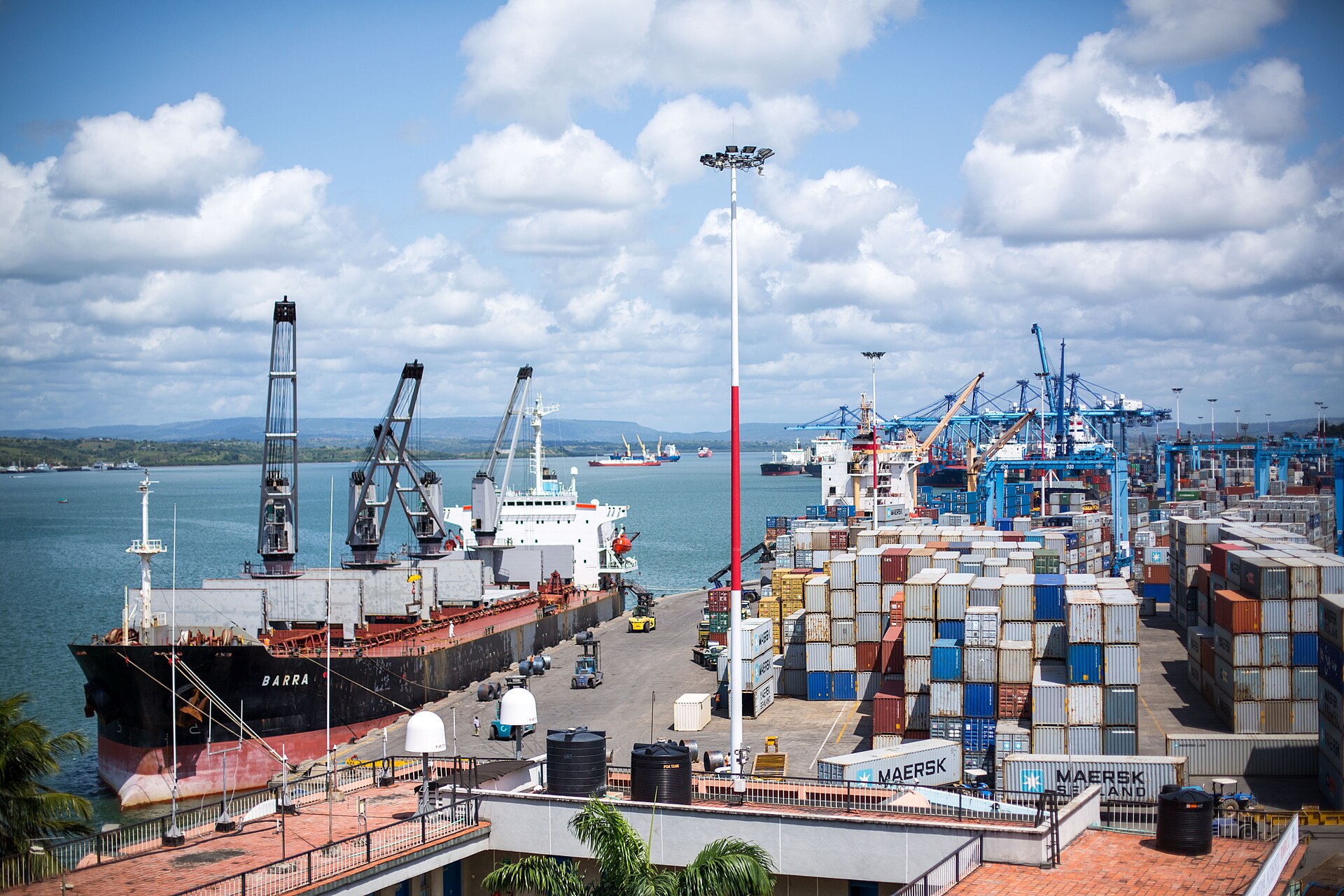
The world's ocean economy is now a USD 2.5 trillion trade business, yet less than one-seventh of international conservation finance reaches the water. That is the awkward arithmetic ministers from roughly 100 countries will carry into Mombasa next week for the 11th Our Ocean Conference, the first held on African soil, opening on 16 June 2026.
According to data UN Trade and Development (UNCTAD) released on World Oceans Day, 8 June 2026, ocean-related services trade reached USD 1.44 trillion in 2025 — 58 percent of total ocean trade, up from 47 percent in 2020. Marine and coastal tourism alone generated USD 785 billion. Maritime freight transport added USD 487 billion. Ocean-related goods crossed USD 1 trillion for the first time, led by ships and port equipment (USD 414 billion), high-tech marine manufactures (USD 402 billion), fisheries and aquaculture (USD 209 billion) and sea minerals (USD 2 billion).
The composition tells a story. Services trade grew 3 percent in 2025, down from 12 percent in 2024, while goods trade expanded 8 percent. The slowdown in services, UNCTAD said, reflects energy-market volatility and disruptions in the Strait of Hormuz that pushed European plastics prices up 70–80 percent and squeezed shipping margins.
The finance gap that won't close
Set against those flows, the conservation arithmetic is bleak. Marine ecosystems represent 71 percent of the planet but receive only 14 percent of international conservation funding, The Pew Charitable Trusts noted on 12 June 2026. Just 10 percent of marine areas and 17 percent of territorial waters are protected worldwide, well short of the 30-percent-by-2030 target that 196 parties to the Kunming-Montreal Global Biodiversity Framework agreed to in 2022.
Writing for Pew, Shubash Lohani, senior director of the group's global conservation initiatives, argued that protecting 30 percent of the planet would lift annual global economic output by USD 250 billion and deliver USD 350 billion in ecosystem services by 2050. He pointed to a 2023 debt-for-nature conversion in Ecuador as a working template: USD 1.6 billion of commercial debt restructured into a USD 656 million loan, unlocking USD 12 million per year for conservation, a USD 5.4 million endowment, and enhanced protections for 989,879 square kilometres of ocean.
UNCTAD has been blunter. David Vivas Eugui, Chief of UNCTAD's Ocean and Circular Economy Unit, told reporters in Geneva that Sustainable Development Goal 14 requires USD 175 billion a year, "yet only $4 billion has been contributed from national funds, philanthropists and private investment." The sum, he said, "is nothing less than peanuts; basically, politicians are not putting their money where their mouth is."
Mombasa's pitch
Kenya's pitch for hosting is part conviction, part demonstration. "For Kenya, hosting Our Ocean is both a responsibility and an opportunity to amplify African priorities, elevate community-led solutions, and help shape the next chapter of global ocean ambition," Hassan Ali Joho, Kenya's Cabinet Minister for Mining, Blue Economy and Maritime Affairs, wrote ahead of the conference. "Our ambition is a blue economy that creates opportunity while safeguarding natural capital for future generations."
The conference series has drawn USD 169 billion in commitments since 2014, across more than 2,900 pledges. Kenya wants Mombasa to deliver an African pivot to that ledger — financing tied to small-scale fishers, mangroves, sewage infrastructure and seaweed value chains, sectors UNCTAD calls central to the next phase of the blue economy.
Mission Neptune, the French ocean-exploration initiative attending the Mombasa conference, framed the gap as exploration as much as finance. "The ocean is Earth's least explored frontier, yet it may hold answers to this century's defining challenges," said Ashok Adicéam, Executive Director of Mission Neptune. "Our challenge is no longer only to generate knowledge, but to ensure that knowledge, technology and exploration become truly shared global public goods."
OceanVines lens
The investable read: ocean services trade is 12 percent of global services trade and growing, but the per-square-kilometre flow of conservation capital to protect the asset base has been falling, as new marine protected areas are designated faster than budgets follow. That is a classic mis-pricing — productive capacity expanding while maintenance capex shrinks. Debt-for-nature swaps, project-finance-for-permanence structures and blue bonds remain niche; UNCTAD's proposed One Ocean Finance Facility is still a proposal.
For ocean education, the Mombasa moment matters because it puts African coastal communities — small-scale fishers, port workers, mangrove planters, tour operators — at the centre of the blue-economy story rather than the margins of it. This is aligned with OceanVines' mission: to illuminate the inner sparks of every life we touch through our efforts in ocean conservation and education.
Together, we celebrate The Greatest Good.