The United Nations on 8 June 2026 — World Oceans Day — released the Third World Ocean Assessment (WOA III), a 1,600-page integrated scientific synthesis compiled by nearly 600 experts from 86 countries and approved by 190 UN Member States in General Assembly Resolution 80/10 of 9 December 2025. It is the only General Assembly–mandated global integrated assessment of the world's ocean.
The headline finding, according to the UN press release, is that the ocean is under severe and accelerating anthropogenic pressure "from the surface to the deep sea," with cumulative drivers — climate change, pollution, overexploitation and habitat degradation — combining to drive widespread biodiversity loss.
The numbers that frame the decade
The Assessment documents that approximately 16 percent of the total increase in ocean heat content since 1955 has occurred since 2018, with the greatest relative warming in the Atlantic Ocean and the southern parts of the Indian and Pacific Oceans. Sea level continues to rise at increasing rates — from less than 2.0 mm per year prior to 2015 to 4.3 mm per year in 2023.
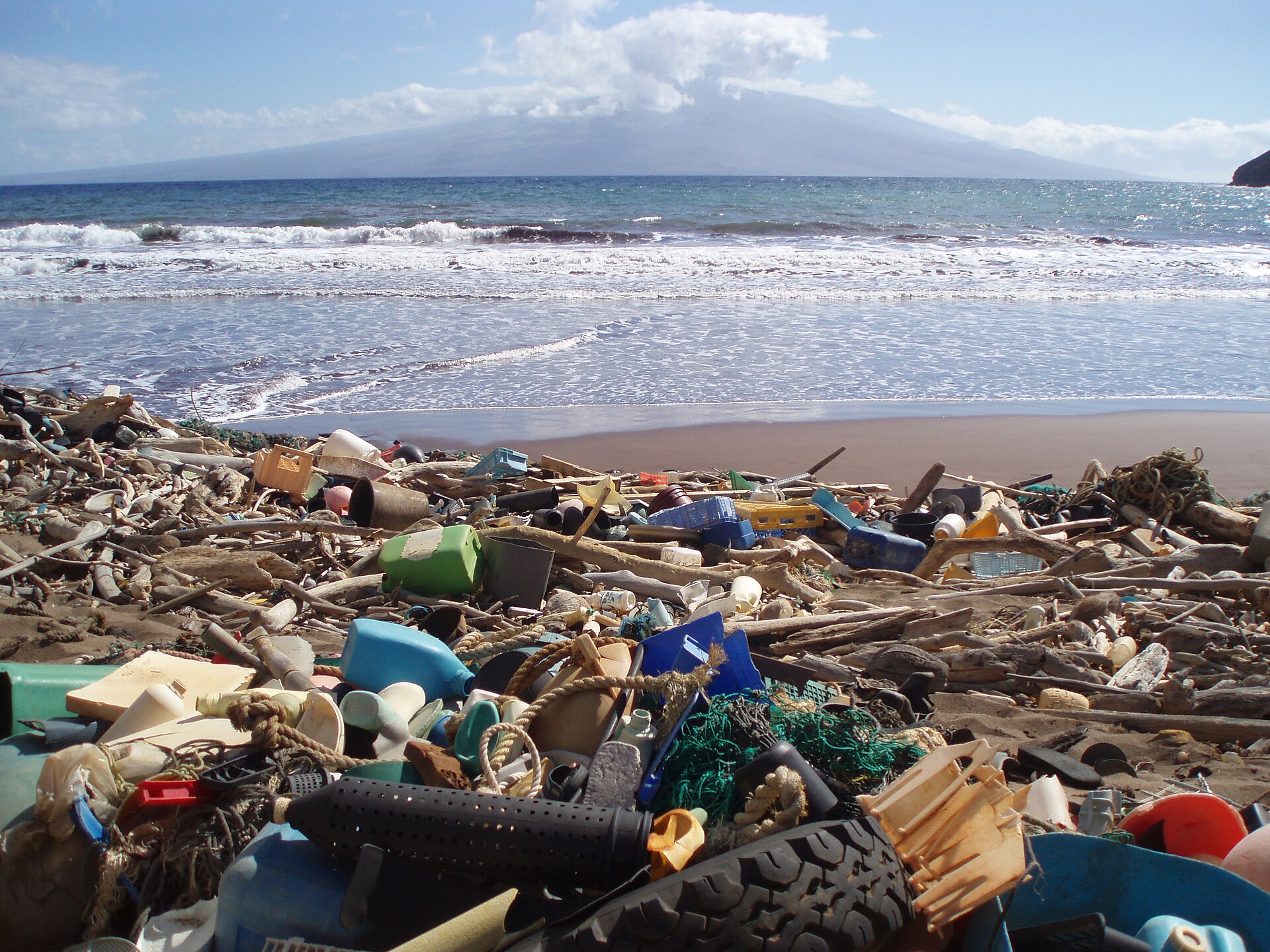
On pollution, 52.1 million tonnes of plastic waste enter the ocean each year, contributing to an estimated 24.4 trillion microplastic particles that are now known to affect more than 4,000 marine species. On knowledge gaps, only 27.3 percent of the seafloor has been mapped as of 2025, leaving the deep sea poorly understood.
On livelihoods, small-scale fisheries employ 60.2 million people and produce 25.1 million tonnes of seafood annually, yet many coastal Indigenous Peoples and local communities lack secure access to resources and meaningful participation in governance.
What the UN Secretary-General said
"The Third World Ocean Assessment, launched today, documents a deepening crisis driven by climate change, overfishing, biodiversity loss and marine pollution," UN Secretary-General António Guterres said in his World Oceans Day message. "We cannot keep treating the ocean as limitless. We must build a new relationship with the ocean: grounded in science, framed by international law and built on shared responsibility — across nations, sectors and generations — to advance the Sustainable Development Goals."
Guterres tied the moment to two recent multilateral wins: the third UN Ocean Conference in Nice in June 2025, and the entry into force of the BBNJ Agreement on 17 January 2026.
What the lead scientists said
"The imperative for a healthy and resilient ocean has never been more urgent," said Rafael González-Quirós, Joint Coordinator of the Group of Experts for the Third World Ocean Assessment, in remarks reported by Xinhua. "Global collaborations and research, and our increased understanding of the ocean, provide essential insights into the state of marine ecosystems, the profound changes they are undergoing and the need for our care."
His co-coordinator Renato Andres Quiñones Bergeret emphasised a structural shift in this cycle: the inclusion of gender, equity and Indigenous knowledge as a formal cross-cutting theme. "Their inclusion reflects the importance of inclusivity and of drawing on diverse knowledge to ensure that responsible ocean management benefits from the perspectives and experiences of all communities," he said.
The governance read
WOA III is the first integrated ocean assessment to include a dedicated ocean-governance section. It catalogues 57 global treaties relating to ocean protection — including the recently adopted Agreement on Fisheries Subsidies and the BBNJ Agreement — but warns that "systemic fragmentation" across climate, biodiversity, fisheries and pollution regimes is limiting collective impact.
OceanVines lens
The investable read: WOA III is the new baseline. Any 30x30 commitment, blue-bond prospectus, fisheries-subsidy reform, plastics-treaty position or seabed-mining lease application made after 8 June 2026 will be measured against its 1,600 pages. For Asia-Pacific capital, three numbers are non-negotiable as inputs: 4.3 mm/yr sea-level rise, 52.1 Mt/yr plastic flux, and 60.2 million small-scale fishing livelihoods.
For ocean education, WOA III's most important innovation is structural. For the first time, Indigenous, traditional-owner and local-community knowledge sits inside the General Assembly's official scientific synthesis — not as a footnote but as a cross-cutting theme. That is the teaching point.
This is aligned with OceanVines' mission: to illuminate the inner sparks of every life we touch through our efforts in ocean conservation and education.
Together, we celebrate The Greatest Good.