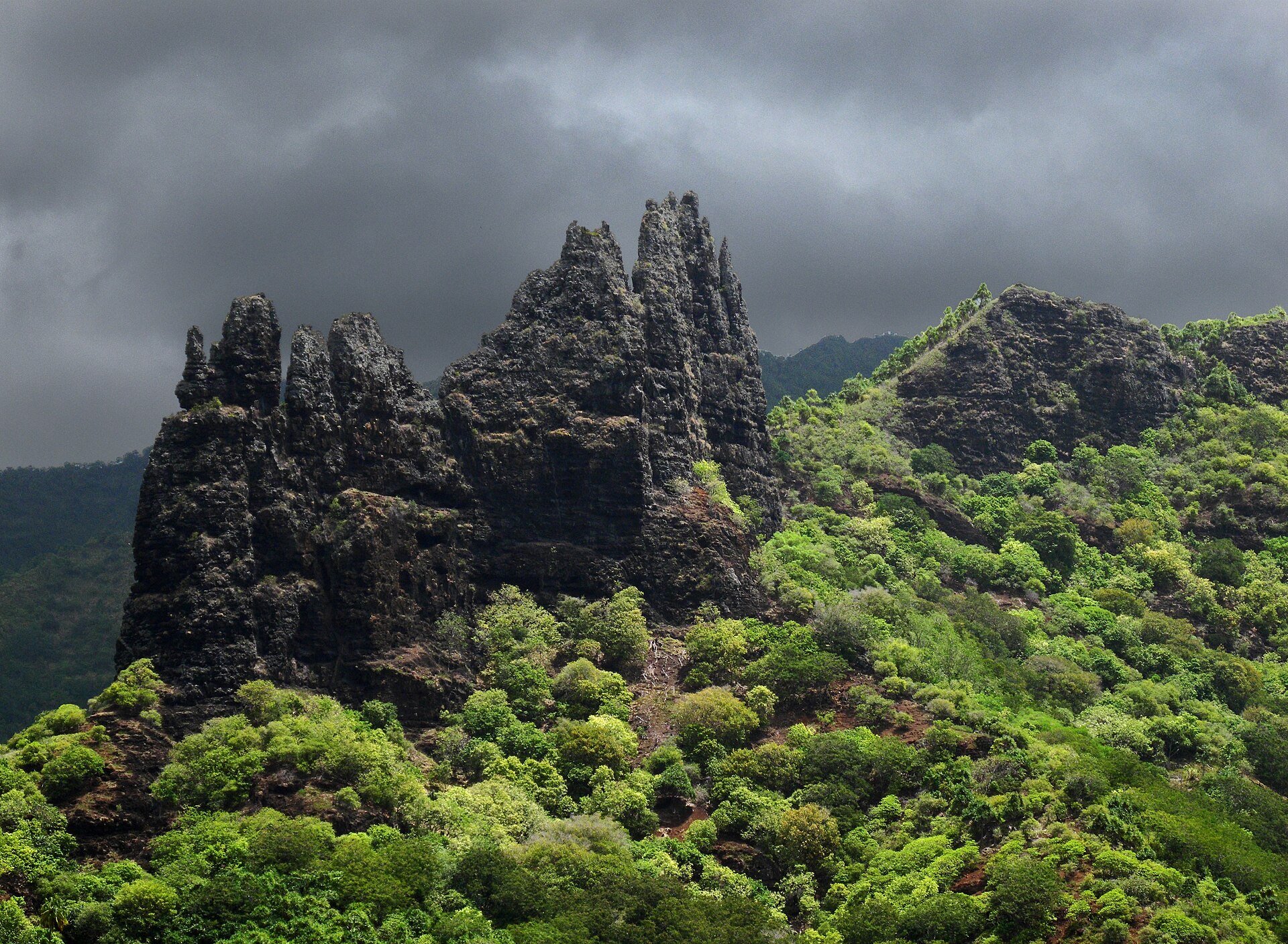
On World Ocean Day, French Polynesian President Moetai Brotherson confirmed that the territory will place an additional 520,000 square kilometres of ocean under the highest level of formal conservation status — IUCN Category 1 — around the Austral and Marquesas Islands. The package, announced on 8 June 2026, takes French Polynesia's strictly protected waters to roughly 1.4 million square kilometres, more than twice the area of continental France, and 30 percent of its 4.8 million sq km exclusive economic zone.
The expansion sits inside Tainui Atea, the territory-wide MPA created at the third UN Ocean Conference in Nice in June 2025. The two new strict-protection zones add to Rahui Nui no Tuha'a Pae in the Australes and Te Tai Nui A Hau — "the great ocean of peace" — in the Marquesas, as reported by La 1ère Polynésie.
What it covers
The two zones — one north-east of the Marquesas, the other south of the Australes — close 520,000 sq km to industrial fishing, mining and trawling. Artisanal fishing by local communities is preserved. The Marquesas Islands, listed in 2024 as French Polynesia's newest UNESCO World Heritage Site, host endemic species including the Marquesan domino damselfish; the Australes anchor cooler, deeper habitats critical to migratory pelagic species, endangered sharks, whales, dolphins, sea turtles and tuna.
"This cements French Polynesia's place as the global leader in marine conservation," said Maël Imirizaldu, a regional lead for the Blue Nature Alliance, a global coalition co-founded by Conservation International. "Their determination to preserve the ocean demonstrates that it is not simply a commodity, it's the matrix that sustains all of us."
The money behind it
A donor group called the Te Moana Collective — Bezos Earth Fund, Bloomberg Ocean Fund, Becht Foundation, Blue Marine Foundation, Blue Nature Alliance, Oceans 5, Pew Bertarelli Ocean Legacy and the Wyss Foundation — has committed an initial US$ 15 million in seed funding for a conservation trust fund designed to give the territory and local communities the resources to manage the network autonomously over 15 to 20 years.
Brotherson said that since the Nice summit, "the only ones putting money into MPA enforcement are either Polynesia itself or the NGOs" — the latter providing the US$ 15 million figure — and asked the French state to "at least take part in the discussion" on additional patrol assets beyond the current and incoming multi-mission patrol vessels, per an AFP interview.
Speaking to AFP, the president framed the decision in Pacific terms: "C'est notre mission en tant qu'Océanien. Et on espère aussi que ça puisse inspirer d'autres pays, notamment les plus grands, dans leur manière de gérer leur relation à l'océan" — it is our mission as Oceanians, and we hope it inspires other countries, including the largest ones, in how they manage their relationship with the ocean.
Why the number matters
The 520,000 sq km figure makes the package the single largest national contribution to the 30x30 goal of protecting 30 percent of the planet's lands and waters by 2030. French Polynesia is now operating the world's largest network of fully protected marine areas within an exclusive economic zone, per the Blue Marine Foundation. The Gambier marine park, contiguous with the United Kingdom's Pitcairn reserve, also forms the largest transboundary strictly protected ocean area on the planet.
OceanVines lens
The investable read: in three weeks, three Pacific jurisdictions — Papua New Guinea, Aotearoa, and now French Polynesia — have moved from policy debate to formal gazette on ocean protection. The pattern is consistent: Indigenous co-leadership, philanthropic seed funding, and a hard timeline. For Asia-Pacific capital tracking blue-economy exposure, the de facto 30x30 path is now visible — and it runs through small island states.
For ocean education, "the great ocean of peace" — Te Tai Nui A Hau — is a teachable phrase. A 520,000 sq km no-take area, named for the legendary ocean that carried the founders of the Marquesan people, ties an IUCN category to a creation story.
This is aligned with OceanVines' mission: to illuminate the inner sparks of every life we touch through our efforts in ocean conservation and education.
Together, we celebrate The Greatest Good.