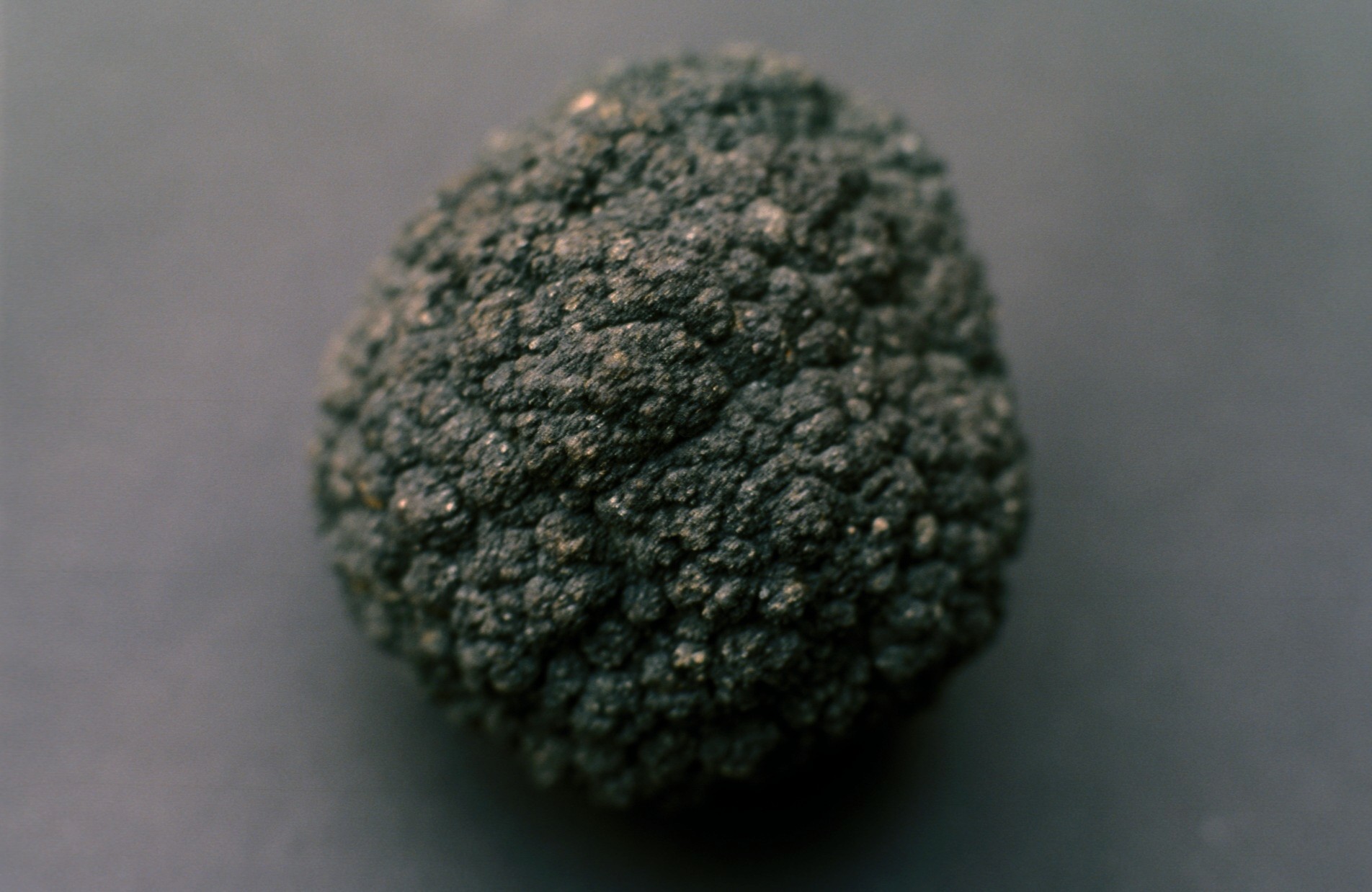
The U.S. Department of the Interior signalled in an April 2026 budgetary document that it intends to hold at least three offshore seabed-mining lease sales during the 2026 and 2027 fiscal years, covering nearly 875,000 square kilometres — roughly twice the size of California — across federal waters off American Samoa, the Commonwealth of the Northern Mariana Islands (CNMI) and Alaska. The first sale is slated for American Samoa in August 2026, a second in CNMI in November 2026, and a third in Alaska in 2027 (Mongabay).
If those auctions proceed as planned, the United States would become one of the first countries in the world to allow commercial-scale deep-sea mining, an industry that has not yet begun anywhere on Earth.
Where the policy lever sits
The leasing process is administered by the Bureau of Ocean Energy Management (BOEM). A BOEM spokesperson told Mongabay the auctions are framed in national-security and economic terms: "Securing reliable access to critical minerals is a national priority." The agency added that its current work to "establish a strong scientific foundation, conduct responsible environmental review, and put sound oversight frameworks in place will help facilitate efficient future development of these important resources" (Mongabay).
Environmental reviews have been formally initiated for American Samoa and CNMI, and NOAA began a related seabed survey in February. The international comparable is the U.N.-affiliated International Seabed Authority, which has issued exploration licences in international waters but no commercial exploitation contracts.
Quotes for and against
"We're picking up rocks at the bottom of the ocean. We're not scraping, digging, blasting, killing fish, dragging nets on the bottom of the ocean. It's a very thoughtful process." — Tony Romeo, CEO, Eco Minerals (Mongabay)
"How can these miners suggest they're causing no harm when they are removing the very structure of the ecosystem?" — Arlo Hemphill, Ocean Campaigner, Greenpeace USA (Mongabay)
"I have always kept the welfare of our people as our top priority. Our tuna industry and the health of our oceans are critically important. Nevertheless, the welfare of our people is always the top priority. And if there is a way our people could benefit from a new industry with no harm coming to our oceans, then any good leader would want to consider the benefits." — Pula'ali'i Nikolao Pula, Governor of American Samoa (Mongabay)
Governor Pula's statement followed his characterisation of his administration's position as one of "strong caution and opposition to rushed commercial leasing." American Samoa enacted a moratorium on seabed mining within its 3-nautical-mile territorial waters in 2024; the U.S. federal waters proposed for leasing sit beyond that, extending out to the 200-nautical-mile EEZ boundary.
Indigenous and regulatory critique
"It's kind of an insult at this point, because we've already opposed it, and our voices are seen as optional." — Sabrina Suluai-Mahuka, Founder, Fina Finau Foundation (Mongabay)
Angelo Villagomez, a senior fellow at the Center for American Progress who grew up in Saipan in CNMI, described the lease push as "a profound failure of governance and a direct assault on the rights of the Indigenous peoples who call these islands home" (Mongabay).
Former BOEM director Elizabeth Klein, who led the agency from 2023 to 2025, warned that staffing and enforcement infrastructure is not in place: "BOEM and BSEE don't have staff located in the territories. The closest offices will probably be the Pacific office, which does not have sufficient capacity to handle this new industry." She added that even supporters of mining "should be advocating to the agency that they slow down … because I think moving this fast runs the risk that those first projects … are going to fail because they have not established or done the homework to make sure that they've generated goodwill amongst the territorial communities" (Mongabay).
BOEM and BSEE were separated in 2010 after the Deepwater Horizon spill, the largest marine oil spill in U.S. waters. Plans now circulating would re-merge them into a single Marine Mineral Administration.
OceanVines lens
The investable read: deep-sea mining moves from debate to commercial sequencing on the U.S. side inside 12 months, while Pacific island governments have locked in transboundary MPAs that point the other way. Two ocean-economy theses now compete openly: extract-then-monitor versus protect-then-research.
For OceanVines, the lesson is procedural. Ocean literacy now means teaching coastal communities to read an environmental impact statement and an ISA exploration contract — not only a tide chart.
This is aligned with OceanVines' mission: to illuminate the inner sparks of every life we touch through our efforts in ocean conservation and education.
Together, we celebrate The Greatest Good.