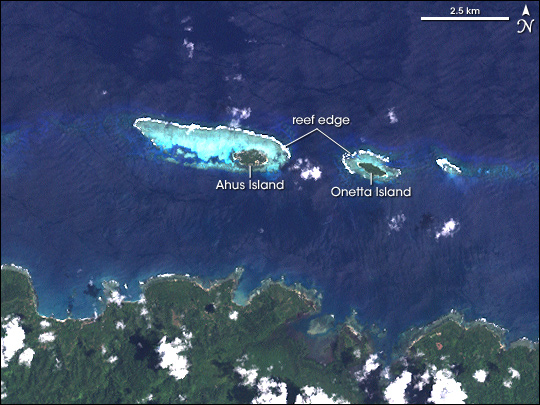
Papua New Guinea announced the Western Manus Marine Protected Area at the inaugural Melanesian Ocean Summit in Port Moresby this month — a 214,000 square-kilometre no-take sanctuary that PNG officials describe as the largest in the country's history and equivalent to roughly nine per cent of its exclusive economic zone (Islands Business).
The announcement sits inside a larger architecture. PNG, Fiji and Vanuatu signed the Melanesian Ocean Corridor of Reserves (MOCOR) Declaration and Framework 2026–2030, an interconnected protected-area network covering at least six million square kilometres — what the three governments call the world's largest transboundary marine protected area (Islands Business).
The numbers behind the policy
According to DIVE Magazine's reporting, the Western Manus zone overlaps 6.7 per cent of PNG's industrial fishing grounds and 10 per cent of its tuna fisheries — a non-trivial commercial footprint to forgo. Authorities have been working with local fisheries on phasing, with no-take provisions implemented inside the boundary and continued fishing rights outside it; the working hypothesis is that closures lift spillover catches at the boundary by 12–18 per cent, consistent with peer-reviewed large-scale MPA studies.
The biodiversity case is the science case. PNG sits inside the Coral Triangle and hosts more than 700 documented reef fish species and over 300 hard coral species. The Western Manus designation was informed by a 2024 three-month National Geographic Pristine Seas expedition with PNG's Conservation and Environment Protection Authority (CEPA) and the Wildlife Conservation Society (DIVE Magazine).
Quotes from the announcement
"Establishing the Western Manus Marine Protected Area will allow us to preserve and protect our ecological legacy and, at the same time, ensure that our ocean continues to provide people with what we need – food and a source of income." — Jelta Wong, Minister, PNG National Fisheries Authority (DIVE Magazine)
"This is not just a beautiful place, it's a highly connected system, where shallow reefs, deep-sea habitats and open ocean waters are linked, supporting species that move across them. Although these reefs are among the healthiest in the Pacific, they are increasingly under threat from global warming, overfishing and plastic pollution." — Lindsay Young, Vice President of Research, National Geographic Pristine Seas (DIVE Magazine)
"With the historic announcement of the Western Manus Marine Protected Area, Papua New Guinea has demonstrated its incredible leadership on ocean conservation on a global scale. This is an important step toward achieving global 30×30 conservation targets while safeguarding some of the most unique and rich marine biodiversity in the world." — Kevin Chand, Senior Director of Pacific Policy, National Geographic Pristine Seas (DIVE Magazine)
Why this counts toward 30x30
The Western Manus designation is explicitly framed as a down payment on PNG's pledge under the Kunming-Montreal Global Biodiversity Framework to protect 30 per cent of the world's oceans by 2030 through MPAs and other effective area-based conservation measures. The transboundary MOCOR layer is designed to cut illegal fishing in the region by half, support marine research, and protect biodiversity-rich corridors that single-nation MPAs cannot reach (Islands Business).
The Melanesian Ocean Summit ran May 11–14, and PNG said it will now begin the national legal designation process. That last step matters: a press-conference MPA without statutory backing has historically meant patchy enforcement. The credibility of the 214,000 sq km figure depends on the bill that follows.
For context on the policy lineage, this announcement aligns with the UNESCO-IOC Ocean Decade Tsunami Programme and the broader Pacific-led push to convert biodiversity ambition into measurable, ratified area. The Western Manus zone joins recent designations in British Columbia, Samoa and Sri Lanka as the operational front of the 30x30 narrative.
OceanVines lens
The investable read: Pacific island governments — not the G7 — are now setting the pace on credible large-scale ocean protection. For an Asia-based ocean charity, this rebalances where the leverage sits. Coral Triangle waters, traversed by Hong Kong-flagged shipping and supplying the region's seafood markets, are increasingly governed by Melanesian policy. Education programmes, partnerships and supply-chain due diligence framed around 30x30 should incorporate that reality.
This is aligned with OceanVines' mission: to illuminate the inner sparks of every life we touch through our efforts in ocean conservation and education.
Together, we celebrate The Greatest Good.