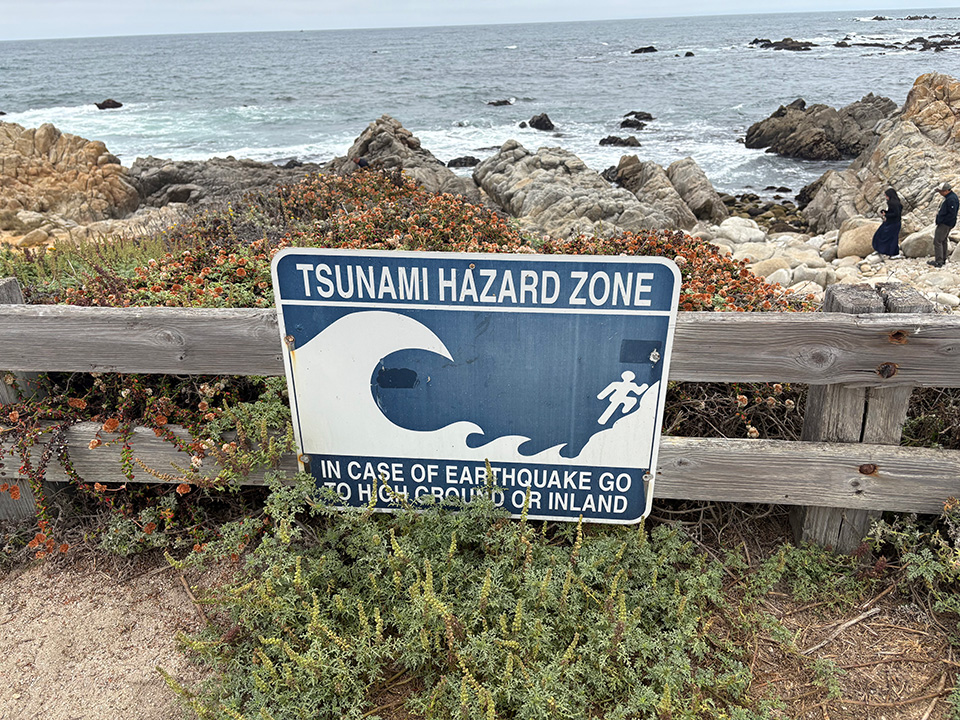
Samoa formally launched its Tsunami Ready Recognition Programme in Apia during National Environment Week 2026, bringing the Government of Samoa, the U.S. Government and UNESCO's Intergovernmental Oceanographic Commission (UNESCO-IOC) under a single community-preparedness framework that will cover 37 villages, with one — Savaia — renewing its status as the Pacific's first recognised Tsunami Ready community since 2017 (UNESCO).
The investable read is the programme's mechanism. Tsunami Ready is a voluntary, performance-based standard: communities qualify by demonstrating coordinated action across warning agencies, government authorities, scientists and community leaders. That structure shifts disaster-risk capital from one-off infrastructure builds toward replicable readiness audits — the kind of unit-economics conservation finance needs to scale into the Pacific.
What the programme actually finances
Beyond village-level recognition, the initiative funds technical training for Samoa's Meteorology Office and Disaster Management Office, plus hazard assessment, preparedness planning, public education, drills, signage and operational coordination. The architecture is "end-to-end" early warning — connecting science, institutions and communities (UNESCO).
The framing matters because tsunami response is a tide-gauge problem before it is a community problem. NOAA's Ocean Service has noted that its network of more than 200 coastal tide gauges feeds the country's two Tsunami Warning Centers and, increasingly, real-time international advisories, with detection-to-alert times now measured in minutes for many basins (NOAA Ocean Service). A faster sensor network only converts into lives saved when the last mile — the village evacuation route — is rehearsed.
Quotes from the launch
"Today is an important step forward in protecting our people and strengthening disaster preparedness across our communities. Let this launch inspire us to deepen our partnerships, strengthen our communities, and build a resilient Samoa and a resilient Pacific." — Hon. Ale Vena Ale, Samoa's Minister of Natural Resources and Environment (UNESCO)
"Samoa is giving practical expression to a wider Pacific vision in which resilience is built community by community, and early warning only saves lives when it reaches people in time, in ways people understand and through systems they trust. The Tsunami Ready Recognition Programme reflects UNESCO's commitment to supporting Member States through science, cooperation and community-centred action that helps protect lives and strengthen preparedness." — Sardar Umar Alam, Director, UNESCO Office for the Pacific States (UNESCO)
"The United States is proud to partner with Samoa in strengthening community preparedness and resilience. We are working together to ensure that communities have the tools, knowledge, and systems they need to respond quickly and save lives." — Daniel Tarapacki, U.S. Chargé d'Affaires (UNESCO)
Why this counts toward the 2030 target
The Tsunami Ready programme is a building block under the UNESCO-IOC Ocean Decade Tsunami Programme, with the explicit ambition of having 100 per cent of at-risk coastal communities prepared for and resilient to tsunamis by 2030. That is one of the few Ocean Decade key performance indicators with a measurable village-by-village denominator — and Samoa's launch establishes a unit-cost template for Pacific neighbours to follow.
The 2009 South Pacific tsunami remains the country's reference event. Savaia's 2017 recognition was the first proof that a small island community could meet the standard; expanding to 37 villages converts proof-of-concept into a regional template that ADB, World Bank, and bilateral climate-resilience funds can underwrite.
OceanVines lens
For an Asia-Pacific ocean charity, two takeaways stand out. First, ocean resilience is now a measurable, fund-able category — not a slogan — because UNESCO-IOC has defined what "prepared" means at the community level. Second, the Pacific is rehearsing what coastal Asia must scale to: typhoon, storm-surge and tsunami exposure across Hong Kong, the Philippines, Indonesia and Japan share the same last-mile problem Samoa is solving here. Education, drills and trusted local communication channels — exactly the OceanVines toolkit — are the bottleneck.
This is aligned with OceanVines' mission: to illuminate the inner sparks of every life we touch through our efforts in ocean conservation and education.
Together, we celebrate The Greatest Good.