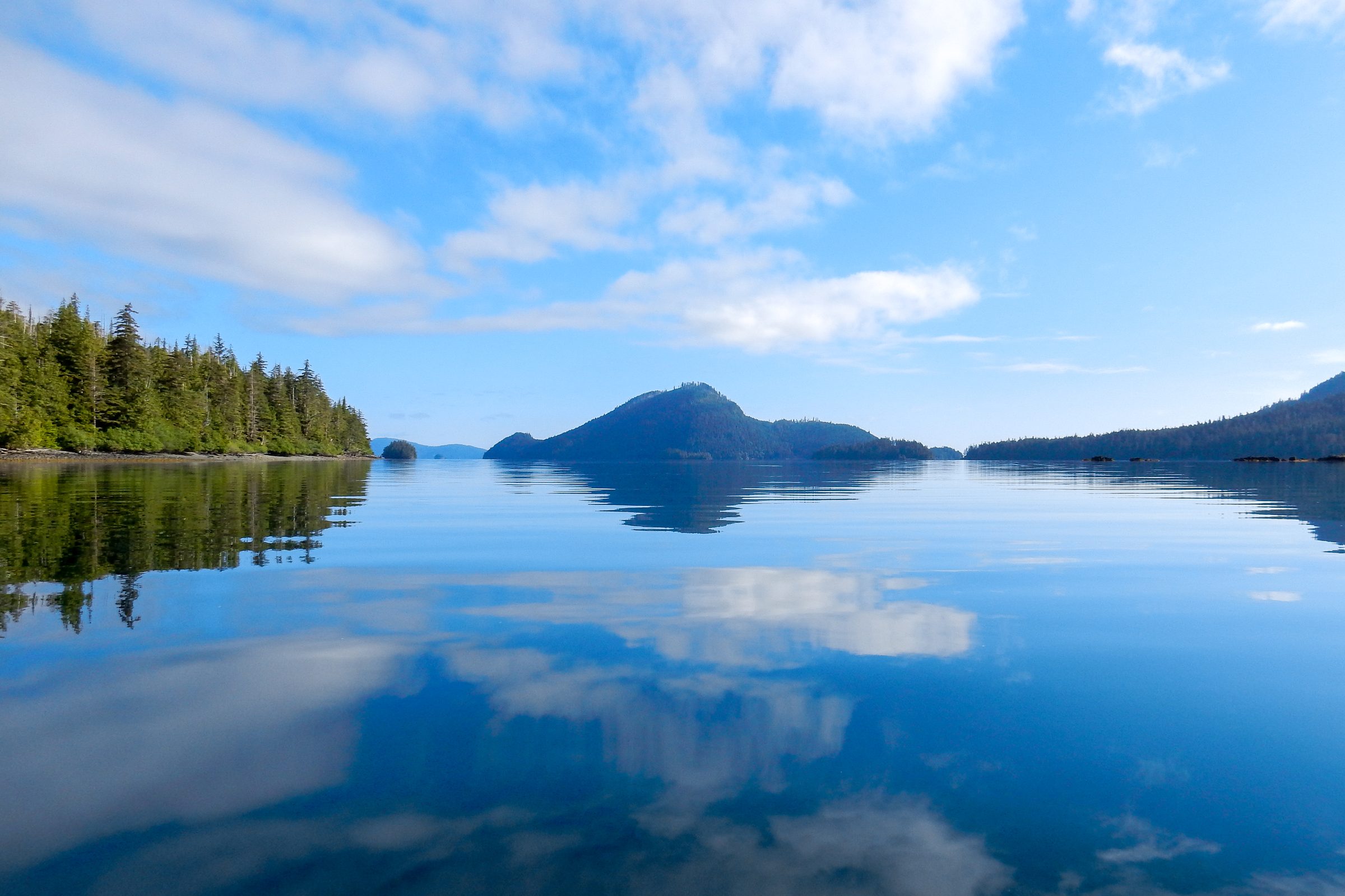
The newest addition to Canada’s marine-protection map will be measured in governance, not just square kilometres. On May 22, leaders from six coastal First Nations and the governments of Canada and British Columbia signed an establishment agreement for Mia-yaltwa Ha’lidzogm hoon, a National Marine Conservation Area Reserve (NMCAR) on B.C.’s Central Coast that shares its footprint with a newly declared Indigenous Protected and Conserved Area.
For policymakers and investors, the near-term dollar story is less about a fresh funding envelope than about whether co-managed zoning, fisheries rules, and stewardship capacity can keep pace with rising pressure on coastal ecosystems. Ottawa has committed to protect 30% of Canada’s oceans by 2030, and Fisheries and Oceans Canada says 17.5% of the country’s marine and coastal areas were conserved as of March 30, 2026 (Fisheries and Oceans Canada).
The Central Coast agreement sets up the harder work: creating a collaborative management board, establishing an advisory committee, and negotiating a zoning plan that can balance conservation with ongoing uses such as fishing and tourism (B.C. Government News).
For the first time in our Nation’s history, this area will be recognized as both an Indigenous Protected Area and a National Marine Conservation Area Reserve, uniting our efforts with provincial and federal governments to manage this precious resource collaboratively. — Chief Chris McKnight, Kitasoo Xai’xais Nation (B.C. Government News)
Parks Canada’s backgrounder describes national marine conservation areas as designed to sustain healthy ecosystems while supporting “ecologically sustainable use,” including activities such as fishing, tourism and recreation (Parks Canada backgrounder).
That framing matters because, in Canada’s system, fisheries governance doesn’t automatically move with a Parks Canada designation. The same backgrounder notes that Fisheries and Oceans Canada retains responsibility for fisheries management and aquaculture in national marine conservation areas, including Indigenous fisheries (Parks Canada backgrounder).
For many years, we have watched our oolichan disappear and our salmon stocks diminish. — Chief Marlou Shaw, Wuikinuxv Nation (B.C. Government News)
The provincial and federal governments argue the new reserve is aligned with the same global biodiversity target that now structures much of the public conversation about ocean protection. “The new Mia-yaltwa Ha’lidzogm hoon National Marine Conservation Area Reserve will help conserve biodiversity and contribute to our government’s goal of conserving 30 per cent of marine and coastal waters in Canada by 2030,” said Julie Dabrusin, Canada’s minister of the environment, climate change and nature (B.C. Government News).
The backgrounder makes clear that formal designation is a multi-year process, and that there are no immediate changes to fishing plans from the establishment agreement alone (Parks Canada backgrounder).
Investors watching the blue economy should take note of that timeline. Marine protection that is durable tends to be built on credible enforcement, clear zones, and predictable rules for communities and operators. Those are also the preconditions for the private capital—ports, tourism, fisheries value chains, and coastal infrastructure—that tends to follow when ecological risk is managed rather than ignored.
For OceanVines, the implication is straightforward: conservation announcements are an entry point, not an endpoint. Our mission is “to illuminate the inner sparks of every life we touch through our efforts in ocean conservation and education.”
If Mia-yaltwa Ha’lidzogm hoon succeeds, it will be because partners turn an establishment agreement into day-to-day stewardship—mapping use, resolving conflicts early, and measuring ecological outcomes in ways that earn trust beyond the news cycle.
Together, we celebrate The Greatest Good.