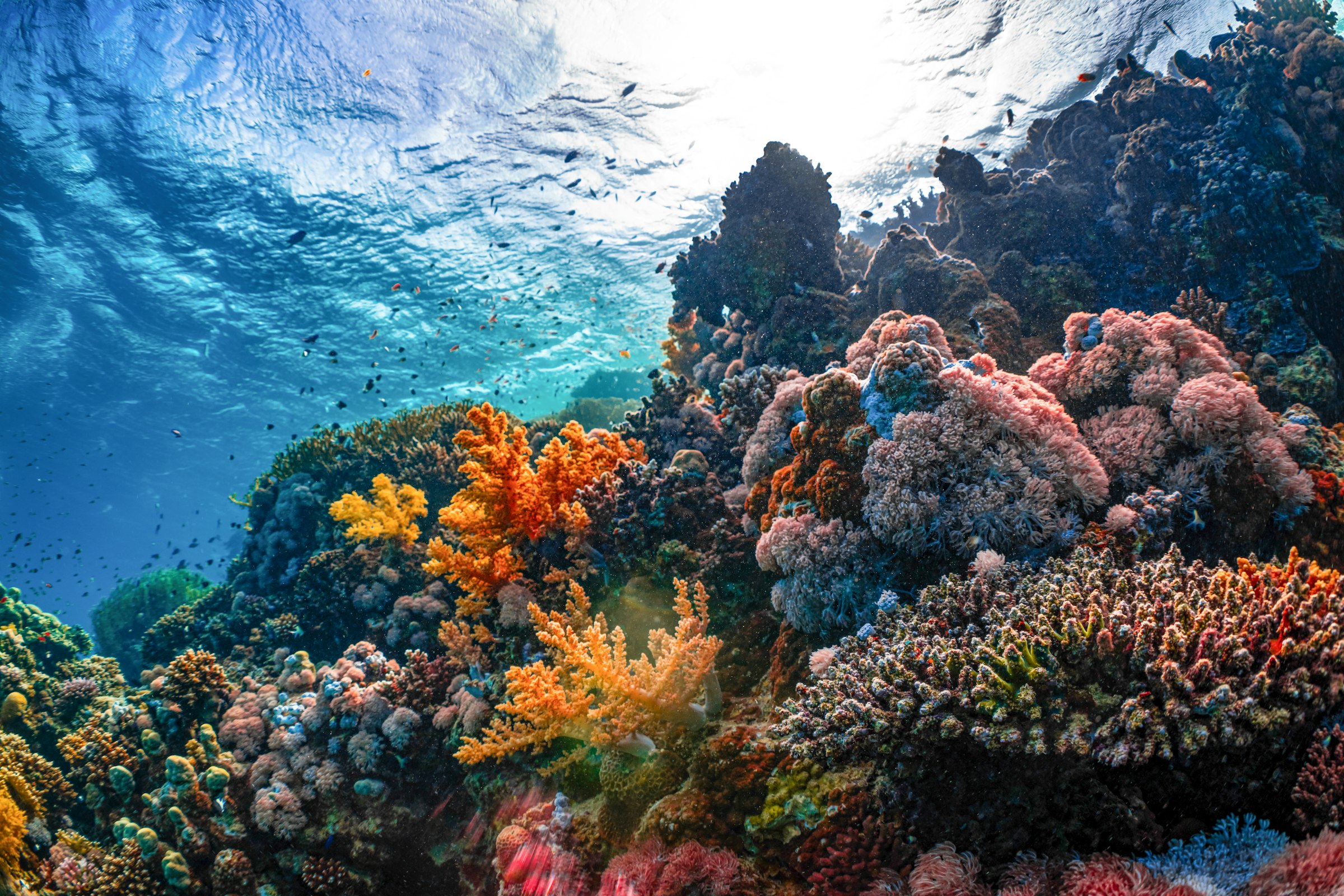
For the first time in human history, more than ten percent of the world's ocean lies inside a protected or conserved area. The milestone, announced on April 1 by the UN Environment Programme's World Conservation Monitoring Centre, arrived six years after its original 2020 deadline — and four years before a far larger one. Read carefully, it is both an overdue triumph and a quiet alarm.
According to UNEP-WCMC, 10.01% of the global ocean is now formally designated. In the past two years alone, governments have added roughly five million square kilometres of marine protection — an area larger than the European Union. Much of the new coverage comes from Asia and the Pacific: 284 newly registered sites in Indonesia and Thailand, the vast Tainui Atea reserve covering nearly all of French Polynesia's economic zone, and a growing patchwork of community-led areas across the Coral Triangle.
For the Asia-Pacific, the symbolism matters. The waters where humanity first learned to fish and navigate are now where the next chapter of stewardship is being written. Ocean recovery, increasingly, is an Asian story.
The Six-Year Lesson
The 10% target was set in 2010 under the Aichi Biodiversity Targets, with a 2020 deadline. The world missed it. That delay, while sobering, is also instructive: marine protection is genuinely difficult work. It requires coastal communities at the table, fisheries data that often does not exist, enforcement capacity in places without coast guards, and political continuity across electoral cycles. The countries that crossed the line did so by treating conservation as infrastructure — patient, multi-generational, and tied to local livelihoods.
The next target is steeper still. Under the Kunming-Montreal Global Biodiversity Framework agreed in 2022, nations committed to protecting 30% of the world's lands and seas by 2030 — the goal known as 30×30. Mongabay notes that to hit it, the world must protect an additional ocean area roughly the size of the Indian Ocean within four years. There is, however, a deeper concern beneath the headline number: only about 3.3% of the ocean is currently classified as fully or highly protected, meaning destructive activities are entirely prohibited. The remaining 6.7% includes zones where extraction continues under various rules. Coverage is not yet conservation.
Voices From the Front
"Safeguarding the ocean's future — and our own — demands collective policy action and renewed commitment to its protection from governments, businesses and communities alike." — Jennifer Morris, CEO, The Nature Conservancy
Morris's framing, delivered at the third UN Ocean Conference in Nice, captures what the 10% milestone really means: it is the start of the work, not the end. The Nature Conservancy has championed the 30×30 goal since its inception and is now working with partners across more than 80 countries to translate paper designations into living, defended ecosystems.
"At this time of great conflict in the world, I believe more than ever in the power of people-to-people exchanges to create mutual understanding. Understanding the ocean is a shared interest." — Ray Dalio, Founder, OceanX
OceanX's recent joint U.S.-China student voyage aboard the OceanXplorer, which began in Hong Kong this past March, is one example of what that shared interest can look like in practice — twenty early-career scientists from two nations learning side by side on the same deck. It is a reminder that ocean protection, ultimately, is a human exercise: it depends on the next generation choosing to care.
"Marine protected areas are key to saving Asia's oceans and coastal communities. The benefits flow far beyond biodiversity — they reach into food security, climate resilience, and local economies." — Asian Development Bank, on the role of MPAs in the Indo-Pacific
From Hong Kong, the 10% milestone reads as both a finish line and a starting gun. Aboard Sea Tiger, our 120-foot floating classroom, OceanVines has now sailed 50 voyages and welcomed roughly 2,000 students, scientists, and stewards into Asia's waters. Every voyage is, in its own small way, a vote for the next 20 percent — illuminating capital, science, and community in service of the same shared horizon. When the sea is healthy, the communities along its edge thrive too. That, for us, is the greatest good.
What Comes Next
The path from 10% to 30% will require three things the past decade did not always deliver: financing that reaches the communities doing the daily work of protection, open science shared across borders, and storytelling that makes the ocean feel close enough to fight for. The first 10% was policy. The next 20% will be partnership.
If you would like to sail with us, learn with us, or stand alongside the communities protecting these waters, step aboard. The voyage is long. The crew is still being built.